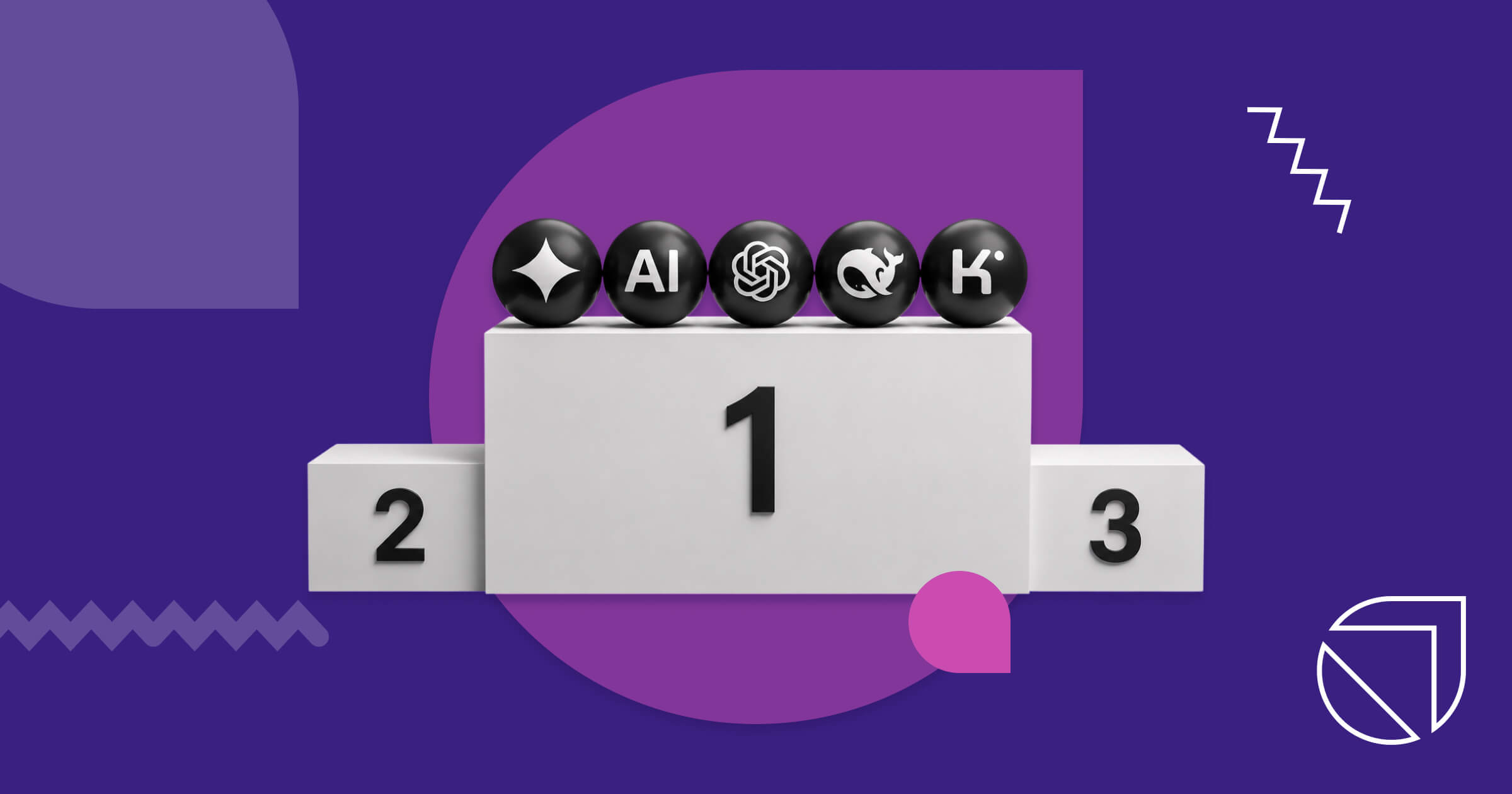
Models are converging. Stanford's 2026 AI Index shows the performance gap between the #1 and #10 models dropped from 11.9% to 5.4% in a single year. When every model is good enough, the model stops being the differentiator. The real moat is your context layer: retrieval, permissions, evaluations, guardrails, and institutional memory that compounds with use and stays yours when you swap models.
Every company building on AI is renting intelligence by the token. The bill compounds. The AI dependency compounds. Neither shows up on a roadmap, and neither gets debated in a planning meeting. It just arrives as a line item that grows every quarter, tied to headcount, usage, and a price you don't set.
That arrangement works for a while. It stops working the moment AI becomes load-bearing for how your company operates. When you rent intelligence, the thing that gets smarter is the vendor's product. Your prompts, your corrections, your workflows, your institutional judgment all flow into someone else's system, and none of it accrues to your balance sheet.
In short
Models are converging fast, which shifts the question from which model to rent to what you own around it. For the full definition of Owned Intelligence and the rent-vs-own economics, see our guide to becoming an AI native company. The rest of this piece makes the case for context as the moat.
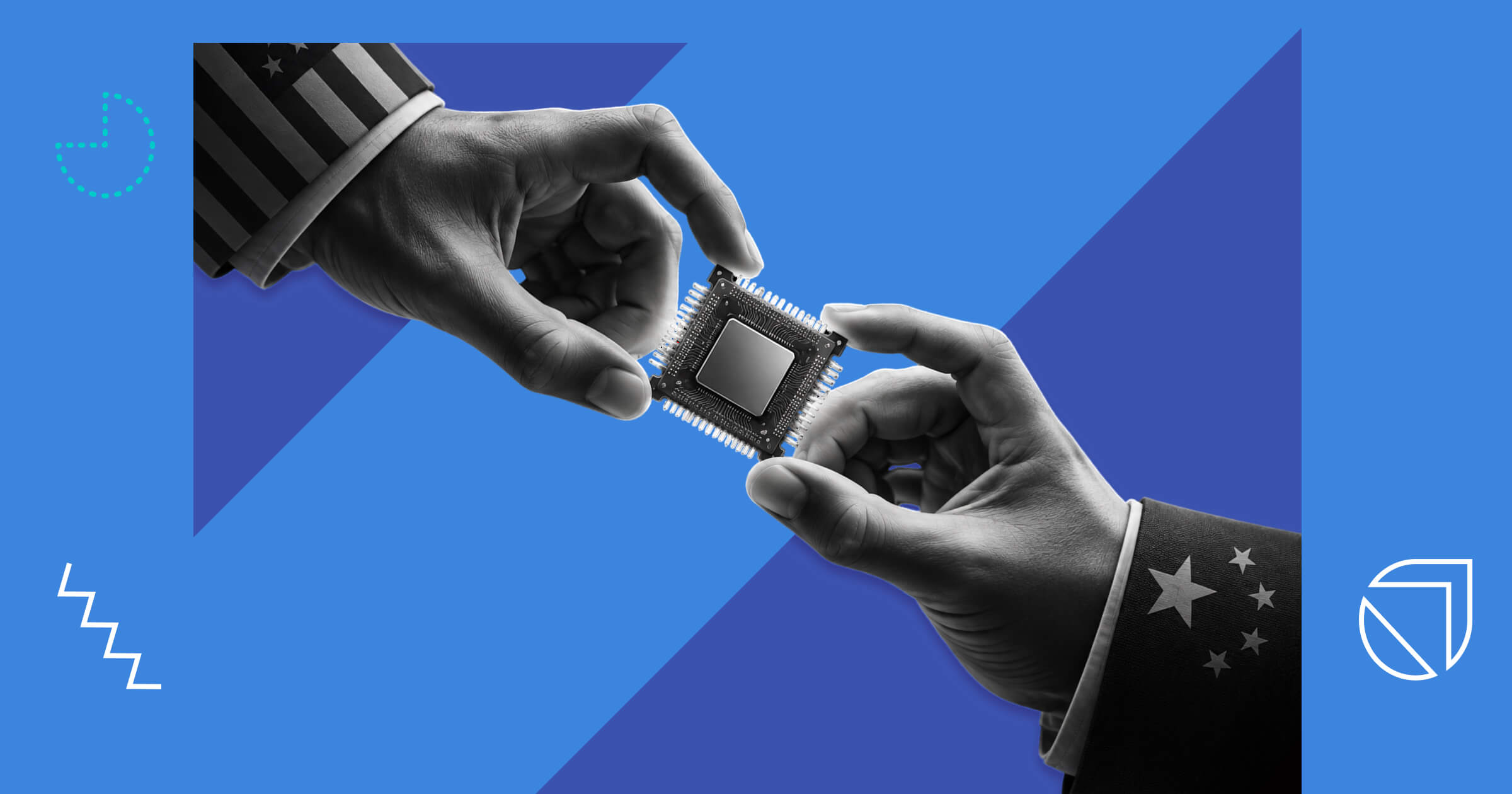
The gap between leading AI models is collapsing, and it's happening faster than most strategies account for. Stanford's 2026 AI Index has the performance gap between the #1 and #10 models dropping from 11.9% to 5.4% in a single year. The top two are 0.7% apart. The best open model trails the best closed model by roughly 3.3%. Leading US and Chinese models are within about 2.7% of each other and have traded the lead repeatedly since early 2025.
Every serious model is good enough for most production workloads. Betting your enterprise AI strategy on picking the right vendor means betting on a difference that keeps shrinking.
Practitioners see the same pattern in their own benchmarks. A Reddit thread on r/LocalLLaMA titled "All LLMs are converging towards the same point" reflects what developers are observing firsthand. Marc Benioff said at Davos 2026 that "what we build on top of the LLM matters most." Atlan framed it as a formula: Performance = Intelligence × Context. Multiplicative, not additive. If context is zero, performance is zero.
The implication for buyers is direct. If you're spending six figures a year on per-token access to a model that five other companies can match, you're buying a commodity. What you build on top of it is what separates you.
Your context is the part of the stack that resists commoditization. Institutional memory, permissions, workflows, evaluations, guardrails, business logic, observability: the layer between your people and whatever model is best this quarter. Nobody else has your customer history, your pricing logic, your compliance constraints, your failure modes, or twenty years of decisions made by people who mostly haven't written them down.
Atlan calls this "non-commoditizable context." Your organization's understanding of its own data can't be trained into a generic model because it's specific to your company, your industry, and your history. While intelligence converges, context compounds. Every employee interaction, every correction, every escalation deepens the asset in a way that rented tools give to the vendor.
You can't own GPT. You can own the retrieval pipeline that feeds it. You can own the rules that govern what it's allowed to say, the taxonomy that structures your knowledge, the feedback loop that captures every correction, and the record of every decision your company has made. That's the part nobody can take back.
For a deeper look at the infrastructure that wraps a model and makes it useful, see our guide to AI harnesses.
A model-agnostic architecture decouples your intelligence layer from the underlying reasoning engine. You separate task definition from model execution, so the logic that makes your AI useful lives above the model, not inside it.
If Claude is best today and Gemini is best next quarter, you swap the reasoning engine and everything else stays. The tools, the memory, the system prompts, the permission policies, the evaluations, the context management, the agent loop: all of it persists across model changes. The same path applies if you later move to open weights running in your own cloud, as we cover in our guide to open weight models.
Being LLM-agnostic means no single vendor is critical infrastructure. You're never renegotiating from a position of weakness because the switching cost is a configuration change, not a rebuild.
One precision point that matters for enterprise buyers: when using managed services like AWS Bedrock or Azure AI Foundry, you're not "putting the model on your servers." The model still runs on the provider's infrastructure. What you own is the intelligence and context layer around the model: the retrieval, the guardrails, the evaluations, the memory, the business logic. That's where the durable value sits, and that's the part that stays yours regardless of which model you point it at.
When your stack is so tightly coupled to one model that switching becomes a rebuild instead of a maintenance task, you've hit AI vendor lock-in. Your prompts, your workflows, and your institutional knowledge end up trapped in someone else's system, and every interaction trains the vendor's product instead of your asset.
The cost is showing up in real budgets. Microsoft canceled its Claude Code licenses after token budgets were exhausted in months, with per-engineer costs running $500 to $2,000 per month. Uber burned through its entire 2026 AI coding budget in four months. These are companies with significant resources hitting the wall of per-token pricing at scale.
Vendor lock-in is a growing concern for enterprise buyers evaluating their AI dependency. The pattern is familiar from cloud computing: what starts as a convenient API becomes a structural constraint once you've built enough on top of it. The difference with AI is that the model you're locked into keeps changing, which means you're locked into a moving target.
For a broader look at avoiding vendor lock-in in your architecture, see our guide to cloud-agnostic architecture.
Owning your context means building the intelligence layer that sits between your data and whatever model you choose. The components are concrete and buildable:
At NineTwoThree, this runs as a Rapid Validation Sprint into production hardening, typically three to five months at a fixed price. You own the code, the prompts, the architecture, and the data. Our AI Strategy Template includes a 24-month ROI payback calculator and a technical implementation plan if you want to model the economics yourself.
Consumer Reports saw a $20M revenue lift from their AI initiative. K&L Wines saved 14+ hours per day at 99% SKU accuracy. Across 27 projects, 24 have been ROI-positive, with a 97% project success rate.
Owning isn't always the right answer. If you're prototyping, exploring, or automating something low-stakes and generic, rent it. Off-the-shelf tools are excellent at generic. Paying to build what you could subscribe to for $30 a seat is a bad trade.
Own when the work touches your core IP, your regulated data, your differentiated process, or when usage is scaling fast enough that per-token costs are becoming a real number. The model selection process matters less than the architecture decision around it.
AI amplifies whatever you feed it. If your escalation logic is a mess and your data governance is theoretical, owning the intelligence layer will industrialize the mess. The audit step determines whether any of this works. Skip it, and you'll scale the dysfunction along with the capability.
Pick one workflow where your context is the whole advantage: the thing a generic model gets wrong because it doesn't know how your company operates. Build the owned layer for that one workflow. Measure it. Then extend.
The companies that win with AI over the next decade will be the ones that owned the intelligence around the model. Picking the best model won't be enough.
Ready to build your own AI harness? Talk to NineTwoThree about a Rapid Validation Sprint, or download our AI Strategy Template to model the ROI yourself.



.jpg)

.jpg)