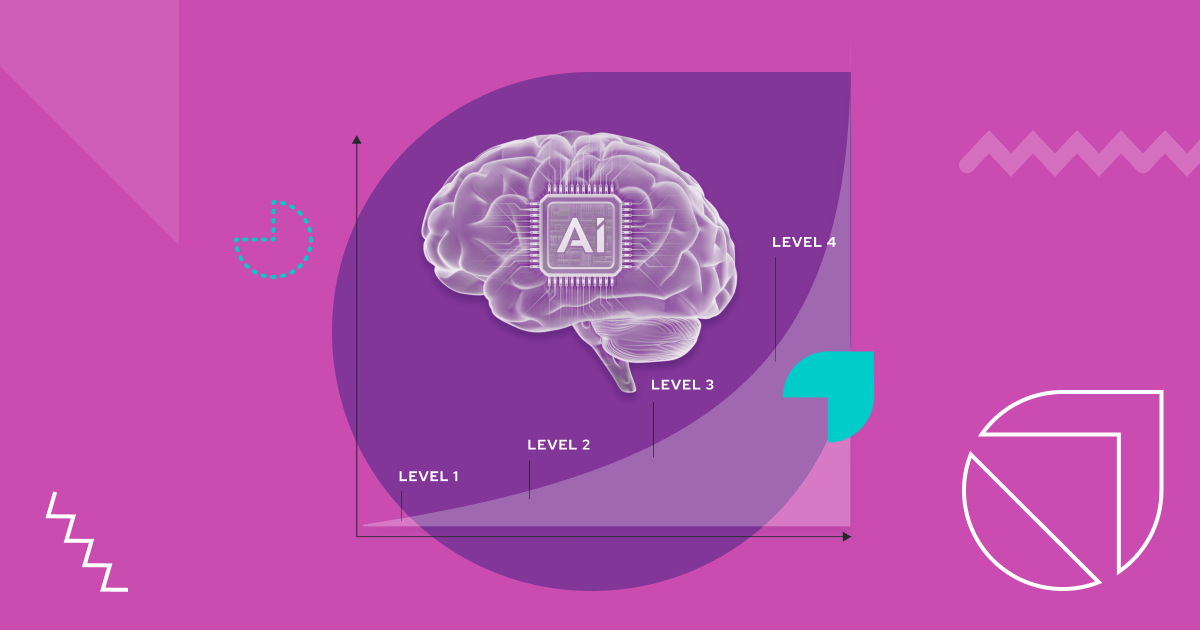
An AI native company builds proprietary intelligence on its own data instead of renting AI tools from vendors. The shift takes three steps: connect your systems, deploy company-wide AI governance, and develop Owned Intelligence that compounds with every employee interaction. Companies that own their AI see measurable ROI. Companies that rent it don't.
JPMorgan built it. Shopify named theirs River. Ramp calls it Glass. IKEA used it to generate $1.3 billion in new revenue.
The Fortune 500 isn't renting AI anymore. They're owning it.
And the gap between companies that own their intelligence and companies that rent it is about to become the defining competitive divide of the next decade.
I've spent 14 years building software products, and the last five focused almost exclusively on AI transformation. We've shipped over 175 products, worked with companies like Consumer Reports, Experian, SimpliSafe, and FanDuel. And the pattern I keep seeing is this: the companies winning with AI aren't the ones buying the most tools. They're the ones who decided to stop renting and start building.
This article is the playbook for how to make that shift. Not the billion-dollar JPMorgan version. The version that works for companies doing $20M and above who want to become AI native without burning two years and seven figures on experiments that get shelved.
There's a word getting thrown around a lot right now: AI native.
Most people use it wrong.
Buying Copilot seats doesn't make you AI native. Letting your employees use ChatGPT doesn't make you AI native. Building a chatbot for your website definitely doesn't make you AI native.
Those are all examples of what I call Rented AI. You're paying someone else for access to intelligence that isn't yours, built on data that isn't yours, running on infrastructure you don't control. The moment that vendor changes their pricing, their terms, or their model, you're starting over.
An AI native company is fundamentally different. It builds what we call Owned Intelligence. A proprietary foundation where your institutional knowledge becomes a compounding asset. You own the code. You own the prompts. You own the architecture. And every time an employee uses the system, your moat gets deeper.
The difference between Rented AI and Owned Intelligence is the difference between leasing office space and owning the building. One is a monthly expense. The other is an appreciating asset.
This isn't theoretical. The Fortune 500 has been building proprietary intelligence layers for years. They just don't talk about it much because it's their competitive advantage.
Shopify built an internal agent called River. It's treated as a digital employee across the entire organization. Not a tool. An employee.
Block (Square) built Goose, a developer-facing agent built on open standards using the Model Context Protocol. Their engineers don't use generic AI. They use their own.
Ramp built Glass. It took their finance team from clerks who catch violations to strategists who design policy. Same people. Completely different output.
JPMorgan built the OI Hub for 230,000 employees. Every interaction deepens their proprietary moat. Competitors can't buy what JPMorgan has built because it's trained on JPMorgan's data.
McKinsey built Lilli. 72% of their global workforce uses it daily. It saves an estimated 50,000 consultant hours per month by compressing days of research into minutes.
IKEA built Billie to handle customer service and Kreativ for interior design. Billie handles 57% of all customer inquiries. But here's the part nobody talks about: IKEA retrained the displaced customer service employees into remote interior design consultants. That new service generated $1.3 billion in its first year.
We built something similar for Consumer Reports. They had 90 years of trusted product data. We vectorized it into an AI search experience that has driven over a million new conversations. That system is still in production. Still compounding.
None of these companies are renting intelligence from a chatbot vendor. They own it.
Most companies don't have a billion-dollar budget. They don't need one. The cost of building Owned Intelligence has come down dramatically. What took JPMorgan years and hundreds of millions, a focused team can now deploy in 90 days.
Here's what I tell every executive I meet: you have two forces eroding your competitive advantage simultaneously, and most leadership teams aren't tracking either one.
The first is Brain Drain.
As your most experienced people retire or leave, decades of undocumented troubleshooting intuition walks out the door with them. Every "where do I find this" and "how do I do this" question becomes an interruption tax on your remaining experts. They're spending hours as human retrieval mechanisms instead of doing the work only they can do.
The longer answers take, the more revenue leaks. Missed deals. Delayed delivery. Slower response times. I call this the Manual Tax, and every company is paying it whether they realize it or not.
Owned Intelligence turns the "24-hour answer" into 3 seconds. With the right permissions.
The second force is Shadow AI.
Your employees are already using ChatGPT, Claude, and Copilot. Right now. Without guardrails.
A few questions worth asking your team: Are all the toggles OFF to prevent training the internet on your proprietary data? Can you tell me your 5-year AI plan with confidence? Do you own your employees' prompts? When they leave, what happens to everything they built?
Your employees are running around the company leaking sensitive data to tools you don't control. This isn't a hypothetical risk. Samsung, JPMorgan, and Apple all found out the hard way.
This is where Sovereign AI stops being abstract policy and becomes an operational emergency.
You've probably heard "Sovereign AI" discussed in the context of nations and governments. Deloitte's 2026 State of AI report found that 77% of companies now say the location of AI development is a key factor when choosing new technologies. But sovereignty isn't just a government concern. It applies directly to your company.
If your institutional knowledge is being fed into public models, you've lost control of your most valuable asset. Sovereign AI at the enterprise level means your data stays yours, your intelligence compounds internally, and no external platform can revoke your access to your own knowledge.
You wouldn't let a foreign government control your power grid. Why let a public model control your institutional intelligence?
Here's a stat that should concern every executive: 87% of Fortune 500 companies fail to achieve measurable AI ROI.
The paradox is that your people are ready for AI. They're begging for it. But the systems aren't ready for them.
Most companies are running 2026 tools on 1990s workflows. The information your employees need is there. They're asking for it every day. They just can't find it because your organization's systems were built to talk to humans first, not to talk to each other.
SharePoint doesn't talk to Salesforce. Salesforce doesn't talk to your ERP. Your ERP doesn't talk to anything built after 2003.
This isn't a technology problem. It's an architecture problem. And it's why tool adoption alone never works. You can buy every AI product on the market and still fail if the underlying systems can't share information.
The companies that succeed with AI don't start by buying tools. They start by building the infrastructure that lets AI actually work.
After 50+ AI transformations, I can tell you the companies that succeed all do three things. In this order.
Plan and architect a unified system where all your software talks and listens to each other. Your SharePoint, Salesforce, HubSpot, and Teams need to become a connected intelligence layer, not siloed tools.
This is the step everyone wants to skip. They want the AI agent. They want the chatbot. They want the demo they can show the board. But without the infrastructure, every agent you build is just a prettier way to access bad data.
When executives have confidence in what they're deploying, employees gain trust in the company direction. This means setting clear rules: who owns the data, who can see the payroll, who has permission to query what.
BNY Mellon does this well. They treat their 150+ AI agents as Digital Employees, each with unique IDs, credentials, and human supervisors. Every action has a logged audit trail. That's the kind of structure that clears Legal and Compliance, and it needs to be established before the first line of code is written.
This is also the AI readiness assessment most companies skip. They jump straight to building without knowing if their data is even ready to be indexed.
Once you have the infrastructure and the governance, you build the asset.
Owned Intelligence is a 100% proprietary architecture. It's not a chatbot. It's your company's brain, indexed, permissioned, and secure. It extends your existing stack. Yes, even the 37-year-old ERP. We modernize the workflows around it, not rip-and-replace.
It's built on open standards like the Model Context Protocol (MCP), co-developed by Block/Square and Anthropic. That means if you want to swap the underlying LLM in two years, you can. No vendor lock-in.
Public AI averages answers to the mean. Owned Intelligence lets you build an Expert Clone that reflects your rules, your brand voice, and your historical success.
And here's the part that matters most: it compounds. Every employee interaction makes your moat deeper. Competitors can't purchase what you've built. That's the Data Network Effect, and it's exactly why JPMorgan, Shopify, and Ramp invested in building their own.
The top areas we see companies build on Owned Intelligence first: analyzing and deciding (RFP generation, compliance review), producing work (report automation, content generation), gathering information (institutional search, customer intelligence), and interacting with others (customer service agents, employee onboarding bots).
We don't try to boil the ocean. After 175+ projects, we've distilled the process into three stages. 90 days to your first Owned Intelligence asset.
We don't start by coding. We start by aligning. In 48 hours, we get into your systems, audit Shadow AI usage, and establish an AI governance framework. Who owns the data? Who can see what? What are the rules before a single line of code gets written?
You walk away with an AI Constitution and Use Policy. Think of it as your company's declaration of AI sovereignty.
We pick one high-impact workflow. We prove the data works. We lock the ROI math. This is the AI implementation strategy phase where we de-risk the build before you commit real dollars.
Can your SharePoint folders actually be indexed? We find out now, not in month six. You walk away with a fixed-price build roadmap and one ROI-generating solution.
We build the secure foundation plus your first real application on top. An RFP Ghostwriter. An HR Bot. A Compliance Agent. Whatever has the highest ROI from Stage 2.
We're not building a $10M skyscraper. We're building the high-speed foundation and the first floor. Once that's built, you own the land and the slab. You can add floors whenever you want.
After Stage 3, you own the foundation. Next year you can build 10 more apps on the same layer. With or without us. You own the asset.
NineTwoThree has a 97% success rate. Only 3% of our projects failed to reach measurable ROI. 24 out of the last 27 projects have a positive ROI. These are production systems that have been compounding for years.
| Client | What We Built | Result (Still in Production) |
|---|---|---|
| SimpliSafe (2022) | AI crime detection system | CEO cited it during acquisition |
| Consumer Reports (2023) | AI-powered platform improvements | $20M revenue lift |
| Experian (2023) | AI-enhanced SEO and search systems | 4% revenue growth on billions in revenue |
| K&L Wines | AI knowledge base | 14+ hours saved daily, 99% SKU accuracy |
| FanDuel | Conversational AI (Charles Barkley) | Millions of impressions |
These results compound because the systems own the intelligence. They aren't renting it.
We've built Owned Intelligence for Fortune 500s at $500K+. The cost has come down. Your company can have its own River.
Most companies don't have a billion-dollar budget for AI. They don't need one.
We've spent 14 years and 175+ products learning what works. Now the price of the build has come down and more companies are starting to realize what the Fortune 500 figured out years ago: you don't rent your future. You build it.
The question isn't whether your company will become AI native. It's whether you'll do it intentionally, with a plan, or let it happen chaotically while your employees feed your proprietary data to public models you don't control.
Book a free AI strategy call and we'll show you exactly where Owned Intelligence fits in your organization. No pitch deck. Just a conversation about your data, your workflows, and what's actually worth building.



.jpg)

.jpg)