AI guardrails are the input/output controls, content filters, and permission checks that prevent an AI system from producing harmful, non-compliant, or off-brand output. They inspect every request before it reaches the model and every response before it reaches the user. For enterprise teams shipping AI to production, guardrails are the difference between a tool people trust and one that creates risk.
In short
AI guardrails are the input/output controls, content filters, and permission checks that prevent an AI system from producing harmful, non-compliant, or off-brand output. McKinsey defines them as the technical and procedural safeguards that keep AI systems operating within intended boundaries. In practice, they are code that runs between the user and the model, inspecting requests and responses against a set of rules.
Common terms you will encounter include safety filters, content policies, and AI guardrails prompts, definitions, and common terms. They all describe the same concept: code that checks AI input and output against a set of rules. The terminology varies by vendor and framework, but the function is the same.
The concept is simple. The implementation is where most teams get it wrong. Guardrails are not a single filter you add once. They are a set of layered checks that need to evolve as your system handles new edge cases, new user behaviors, and new compliance requirements.
| Guardrail type | What it does | Example |
|---|---|---|
| Input filter | Blocks harmful or out-of-scope prompts before they reach the model | Rejecting requests for restricted data a user's role does not permit |
| Output filter | Checks model responses for harmful content before returning them | Catching hallucinated financial advice before it reaches a customer |
| Permission check | Verifies the user's role and access level before processing a request | Ensuring a junior analyst cannot query executive salary data |
| Content policy | Enforces brand and topic boundaries on what the AI will discuss | Preventing a customer service bot from offering legal advice |
As we describe in our post on building AI apps and the risks you can't ignore, guardrails are one of the core mechanisms that keep GenAI from going off-script. The Cloud Security Alliance makes the case that guardrails alone are not enough: they need to sit inside a broader governance layer that includes logging, review, and accountability. Guardrails are the execution layer. Governance is the policy layer that decides what the guardrails should check.
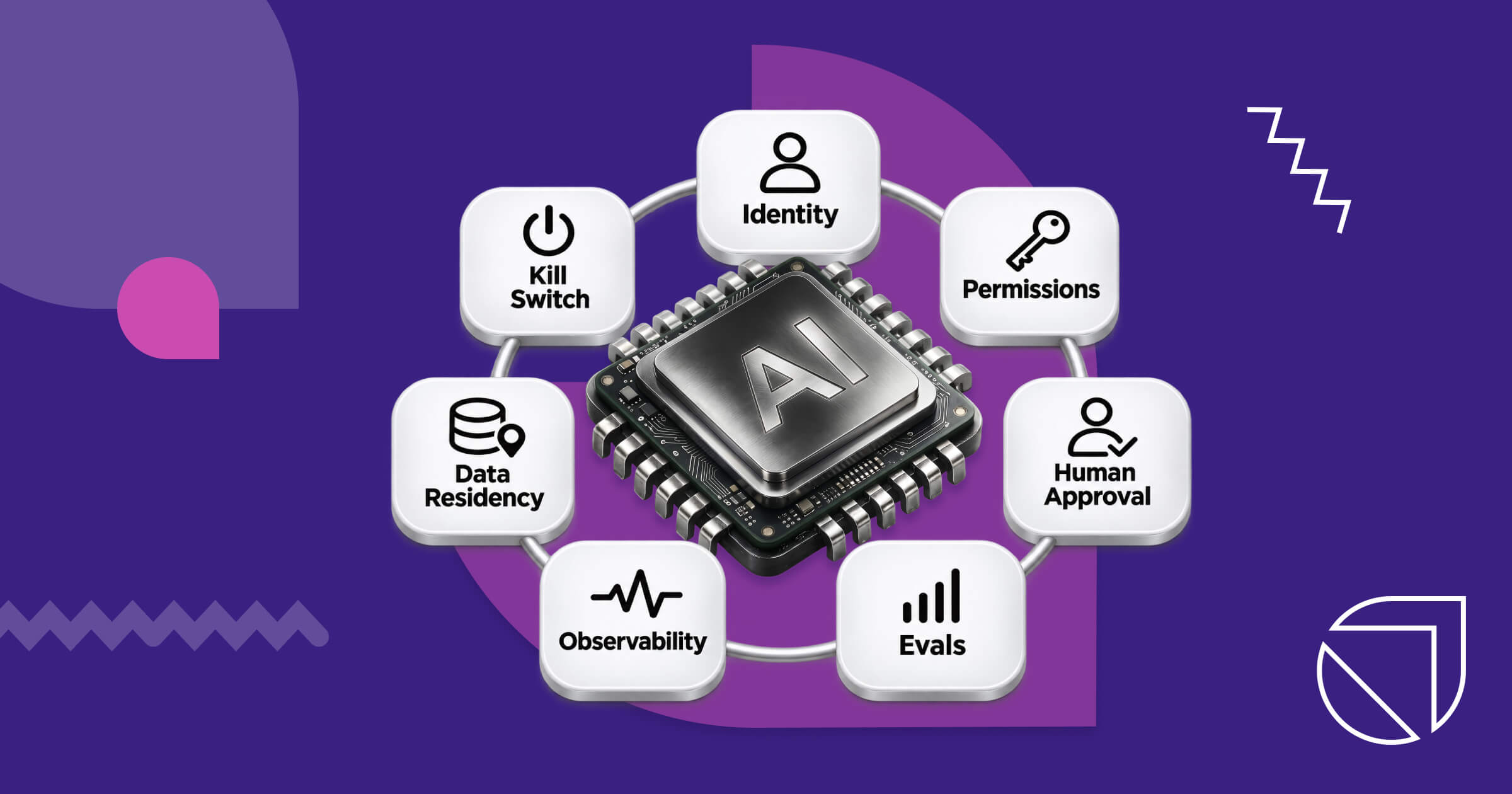
Production AI systems need four layers of guardrails: input validation, output filtering, permission-aware retrieval, and PII detection. Each layer catches a different class of failure, and skipping any one leaves a gap that bad actors or edge cases will find. The types of guardrails in AI you deploy should match your system's risk surface.
| Guardrail layer | What it blocks | When you need it |
|---|---|---|
| Input validation | Prompt injection, jailbreaks, out-of-scope requests | Any system exposed to external users |
| Output filtering | Hallucinations, toxic content, off-brand responses | Any customer-facing or public-facing system |
| Permission-aware retrieval | Unauthorized access to restricted documents or data | Any system querying internal knowledge bases |
| PII detection | Personal data leaking into prompts or responses | Any system handling customer or employee data |
Input validation is the first line of defense. It checks incoming prompts for injection attacks, jailbreak attempts, and requests that fall outside the system's intended scope. A Reddit thread from r/AI_Sales shows enterprise teams actively asking what guardrails to set when rolling out AI to sales teams. The most common concern is preventing users from extracting information the model has access to but should not share.
Output filtering catches what the model generates. This includes hallucinated facts, toxic language, and responses that fall outside the system's intended scope. Output filtering is where most teams underinvest, because it requires understanding what "correct" looks like for your specific use case.
Permission-aware retrieval is the layer most teams miss. When your AI system queries a knowledge base, it needs to respect the same access controls your other systems enforce. A user who cannot access HR documents through your intranet should not be able to access them through an AI chatbot. This layer checks the user's permissions before returning results from a retrieval-augmented generation pipeline.
PII detection runs as a cross-cutting check on both input and output. It scans for personal data like names, social security numbers, email addresses, and medical information. When it finds PII, it can redact it, block the request, or flag it for review, depending on your compliance requirements.
Companies like Anthropic have built Anthropic AI guardrails directly into their models through constitutional AI principles. Model-level safety helps, but it does not replace application-level guardrails. Your system needs its own checks, not just the model's built-in safety layer.
Guardrails belong in the AI harness at the orchestration layer, not bolted on as middleware. Running them where context is constructed means every request passes through the same checkpoint, regardless of which model or endpoint handles it. Practitioners on Reddit have argued that hardcoded safety checks bolted on as middleware become churn risk when the system changes.
The implementation path follows a specific order:
NineTwoThree has shipped 27 production AI projects with a 97% success rate. 24 of 27 projects delivered positive ROI. Guardrails are part of every build, not an add-on.
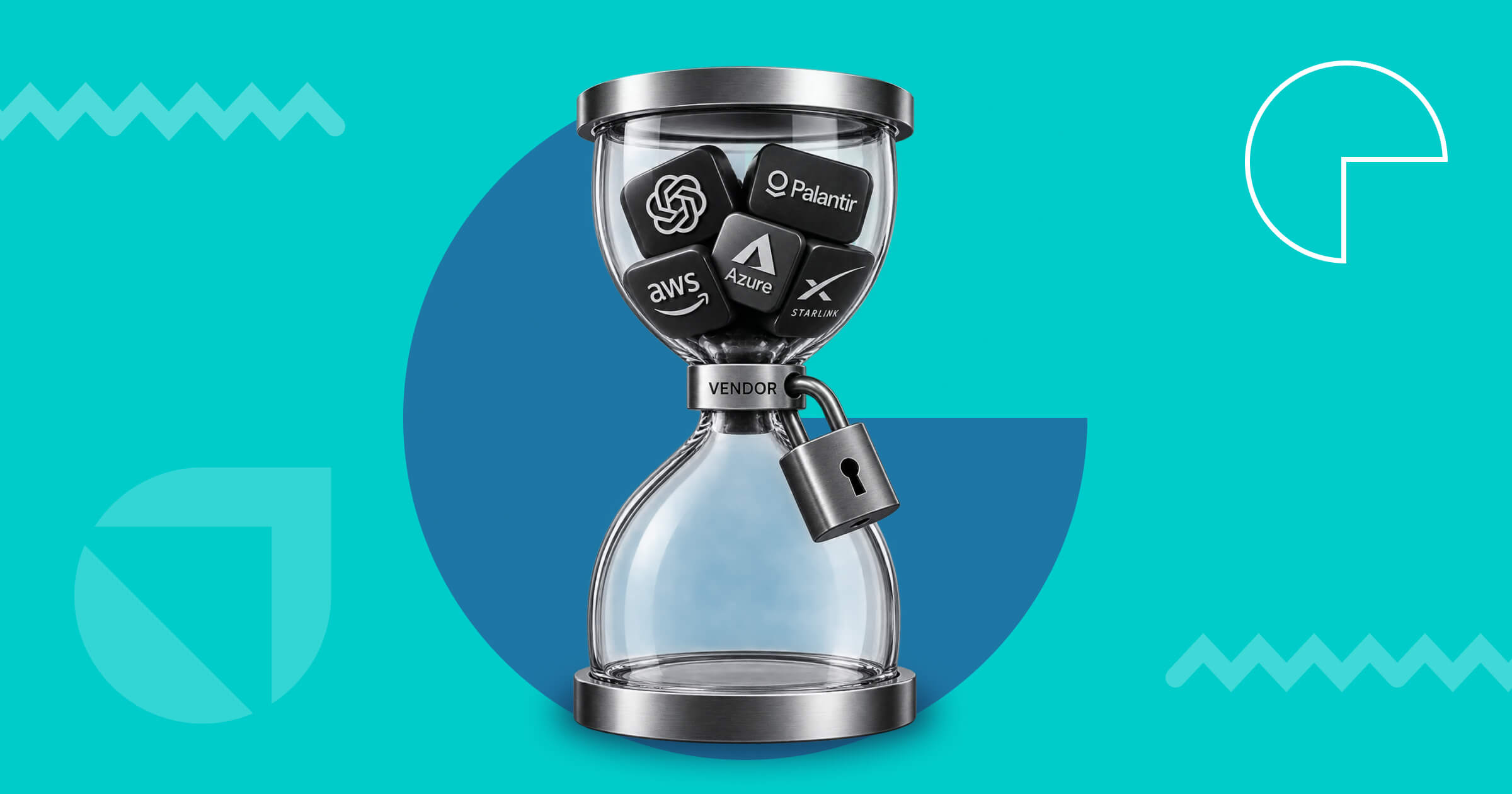
Off-the-shelf guardrails platforms work for prototypes but create vendor lock-in and cannot handle enterprise-specific compliance at scale. The decision comes down to how much control you need over the guardrail logic itself. EPAM and CIO.com both frame this as the central tension in enterprise AI: buy speed now at the cost of flexibility later, or build slowly now at the cost of time to market. If you are looking for tips for picking the right AI guardrails, the best platform for AI guardrails in production depends on your compliance requirements.
| Factor | Build | Buy |
|---|---|---|
| Time to first guardrail | Weeks | Hours |
| Customization | Full control over logic and rules | Limited to vendor configuration options |
| Compliance mapping | Map to any regulatory framework | Limited to vendor supported frameworks |
| Cost model | Upfront engineering, low marginal cost | Low upfront, recurring per-query or per-seat cost |
| Vendor lock-in | None | High, since guardrail logic is vendor-specific |
Open-source frameworks like NVIDIA NeMo Guardrails offer a middle path. They give you a starting point with programmable guardrails you can customize, but they still require engineering effort to adapt to your specific compliance requirements.
If your system handles customer data, operates in a regulated industry, or needs to pass a SOC 2 audit, build your guardrails. The cost of a compliance gap exceeds the cost of the engineering.
When guardrails fail, the damage falls into three categories: legal liability, brand damage, and operational cost. Each one has real examples from 2025 and 2026. AI hallucination guardrails legal concerns are growing as courts begin testing whether consumer-facing AI is treated as a product or a service.
| Failure type | Example | Cost |
|---|---|---|
| Legal liability | AI product liability lawsuits testing whether consumer-facing AI is a product or a service | Ongoing litigation, potential class action exposure |
| Brand damage | Google AI Overviews suggesting glue on pizza and eating rocks | Erosion of trust in AI-generated answers |
| Operational cost | Taco Bell Voice AI requiring constant human intervention across 500 drive-throughs | Staff time, customer friction, viral embarrassment |
The IAPP argues that guardrails alone are not enough because they catch obvious issues but miss contextual, domain-specific risks. A guardrail that blocks profanity will not catch a model confidently recommending the wrong medical treatment. We cover more of these failure patterns in our post on the biggest AI fails of 2025.
The pattern across these failures is consistent. Companies deployed AI without testing for edge cases, without building proper safeguards, and without planning for what happens when the system gets it wrong. Guardrails do not prevent every failure, but they reduce the blast radius of the ones that do happen.
AI agents guardrails need to cover every step of the agent's reasoning loop, not just input and output. Agents take actions that compound errors, so a single unchecked step can cascade into a problem that is expensive to undo. As we discuss in our post on OpenAI AgentKit for enterprises, enterprises need traceability, auditability, and data sovereignty that managed platforms often cannot provide.
The guardrail checklist for agents:
Agents that can take real-world actions (sending emails, modifying records, executing transactions) need human-in-the-loop checkpoints at every action that has side effects. A guardrail that only checks the final output is too late when the agent has already spent budget, sent a message, or modified a database.
Enterprise AI deployments need guardrails that map to specific regulatory frameworks including SOC 2, HIPAA, and EU AI Act requirements. Generic guardrails do not pass an audit. AI guardrails for customer service systems, for example, need different compliance controls than internal analytics tools.
| Regulation | Guardrail requirement | How to implement |
|---|---|---|
| SOC 2 | Access controls and audit logging on all AI interactions | Log every request, response, and guardrail decision with user ID and timestamp |
| HIPAA | PHI detection and redaction before data reaches the model | PII detection layer with medical-specific patterns, redaction before prompt construction |
| EU AI Act | Risk classification and transparency for high-risk AI systems | Document guardrail logic, provide human review pathway, log decisions for regulatory inspection |
Compliance requirements change by jurisdiction and industry. Map your guardrails to the specific frameworks your business operates under, and review them when regulations update. The EU AI Act classifies AI systems by risk level and imposes different requirements on each tier. A system that processes medical data faces different obligations than one that recommends products.
We have built guardrails into 27 production AI systems. Here is what that looks like in practice.
Consumer Reports needed a conversational AI that could answer questions from 90 years of product testing data. The system uses permission-aware retrieval and output filtering to keep responses accurate and safe. The result: a 10x safety guardrail lift, built in 7 months, with 90 years of data vectorized. Consumer Reports' team noted impressive project management coordination across teams in many time zones.
K&L Wines needed a custom AI model to match wine inventory with supplier data. The system processes 500,000+ wine records with 99% match accuracy, saving 14+ hours of manual work daily. The guardrails here are simpler: input validation on the data pipeline and output filtering on the matching logic. Without them, a bad match could propagate through the entire inventory system.
Across all projects, NineTwoThree maintains a 97% success rate. 24 of 27 projects delivered positive ROI. Guardrails are part of the boilerplate architecture we bring to every build: permission-aware retrieval, PII detection, input/output guardrails, and scoped context construction. For teams considering AI knowledge guardrails for their retrieval systems, this architecture is a proven starting point.
If you are shipping AI to production, guardrails are not optional. They are the engineering work that turns a model demo into a system people can trust.
Talk to NineTwoThree about building AI systems with guardrails designed for your compliance requirements. Or download our Effective Guardrails for Your GenAI Apps resource for a deeper look at the architecture.