AI agent governance is the set of controls, policies, and audit mechanisms that keep autonomous agents operating within approved boundaries throughout their lifecycle. For regulated enterprises, governance is what separates a production deployment from a pilot that gets canceled in review. Over 40% of agentic AI projects will be scrapped by 2027, and 54% of enterprises have already had an AI agent security incident.
AI agent governance means building controls into the agent from day one: least-privilege identities, human approval steps, evaluation gates, observability, and a kill switch. This framework maps each control to HIPAA, SOC 2, the EU AI Act, and Colorado's AI law, with a 30-day rollout plan to get from prototype to audit-ready production.
In short
Over 40% of agentic AI projects will be canceled by the end of 2027, according to Gartner. The cancellations stem from governance and evaluation gaps, not model quality. Teams build a working prototype, then discover it cannot pass a security review or compliance audit.
The numbers are clear. 54% of enterprises have already had an AI agent security incident, and most agents still share credentials instead of running on isolated identities. 78% of enterprises have pulled permissions from an AI agent already in production, according to Frontegg and Agen.co. The Cloud Security Alliance has flagged "agent identity sprawl" as an emerging problem, with agents accumulating permissions faster than teams can audit them.
The governance gap by the numbers: 40%+ of agentic AI projects canceled by 2027 (Gartner) • 54% of enterprises had an AI agent security incident (VentureBeat) • 78% pulled permissions from production agents (Frontegg)
The pattern repeats across industries. A team builds an agent that calls APIs, reads documents, and writes to databases. It works in a demo. Then security asks who approved the agent's access, where the audit logs are, and what happens if it sends the wrong data to the wrong system. Without answers, the pilot stalls.
Four AI labs breached nine real companies through gaps that governance controls would have caught. The failures were not exotic. They were missing identity controls, unlogged tool calls, and no human checkpoint before irreversible actions.
Agentic AI governance is the set of controls, policies, and audit mechanisms that keep autonomous agents operating within approved boundaries throughout their lifecycle. It covers what the agent can access, what it can do, who approves its actions, how its behavior is tested, and what happens when something goes wrong. It is easy to confuse agent governance with adjacent concepts, so the table below separates them by scope.
Guardrails alone are not governance. They filter outputs but do not control what the agent can access or who approved its deployment. Building AI apps without understanding the risks is how teams end up with agents that pass content filters but still have unrestricted database access.
Agent governance also differs from traditional application security because agents are non-deterministic. The same input can produce different outputs on different runs.
You need continuous evaluation, not just a pre-deployment checklist.
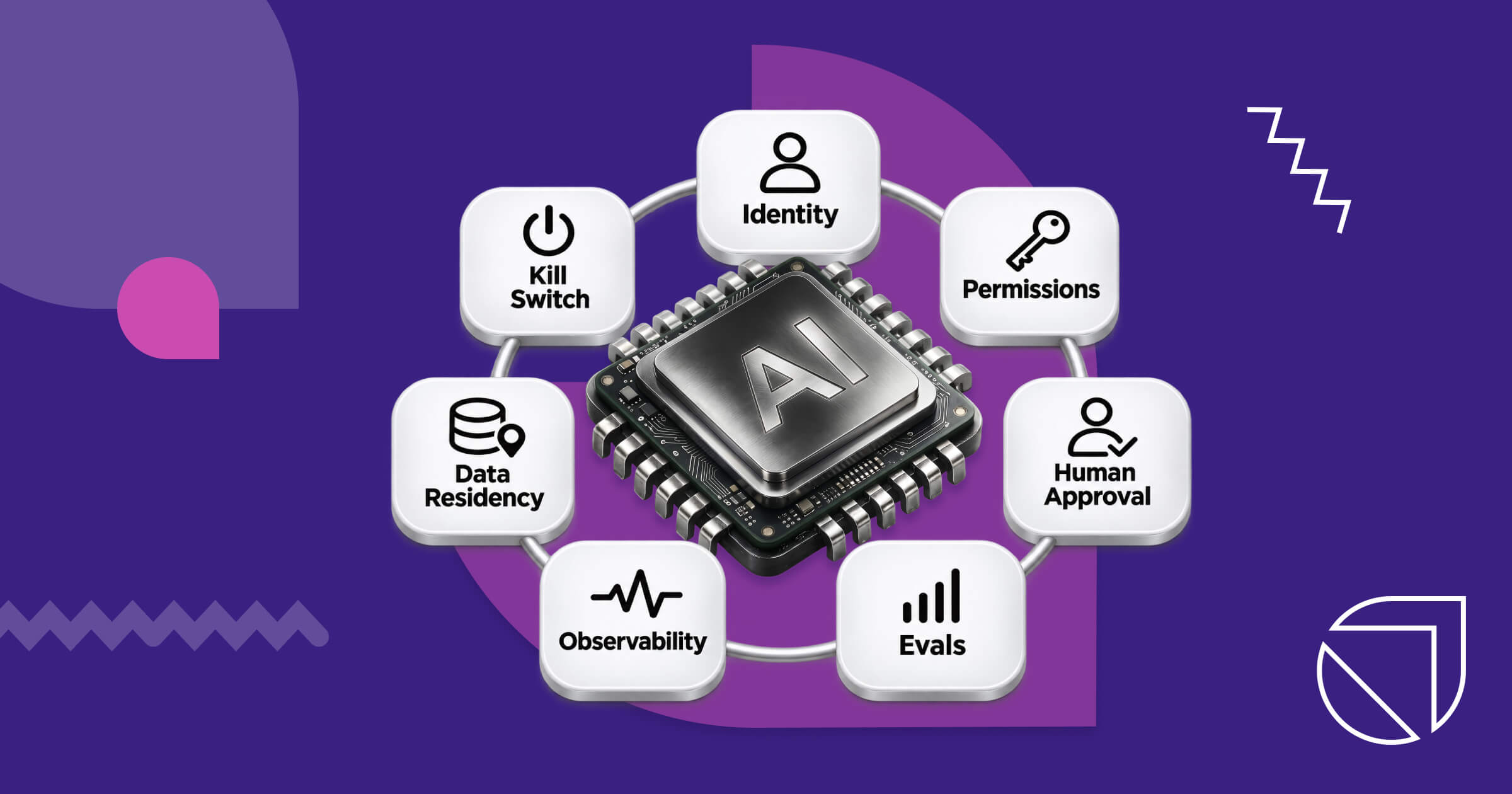
A production-ready AI agent governance framework needs seven controls. Each one addresses a specific failure mode that causes agents to fail security reviews or cause incidents in production.
Each agent gets its own identity with the minimum permissions needed to do its job, never shared credentials. This is the most basic control and the one most teams skip.
53% of enterprises run agents on shared API keys, according to VentureBeat's 2025 survey. The same report found that 60% of enterprises using shared keys experienced an AI agent security incident, compared to 46% for those using isolated identities.
Shared credentials create two problems:
The fix is straightforward. Each agent gets a dedicated service account or API key. Permissions are scoped to exactly what the agent needs. When the agent is decommissioned, its identity is revoked, not reused.
Every action with side effects requires human approval before execution. "Side effects" means anything that changes state, such as writing to a database, sending an email, making a purchase, or deleting a record.
The approval threshold depends on reversibility. If an action cannot be undone (sending an email, executing a trade), it always requires approval. If it can be rolled back (updating a draft), approval can be optional with logging.
Human-in-the-loop creates a checkpoint where a person can catch errors the model cannot detect on its own. The checkpoint adds a small delay, but the tradeoff is worth it for irreversible actions. Decision models can make AI agents safer by routing high-risk actions to human review automatically, without requiring every action to pause.
The control has three components: a policy that defines which actions need approval, a mechanism that pauses the agent and surfaces the request, and an audit log that records who approved what and when.
Evaluation gates test agent behavior against safety and quality benchmarks before deployment and on every update. Red-teaming goes further by having humans actively try to break the agent through adversarial prompts and edge cases.
An AI harness architecture gives you a natural place to put these gates. The harness sits between the model and the tools, so you can intercept outputs, run checks, and block anything that fails.
Evaluation gates should cover:
The tests run automatically on every code change and model update. A failed test blocks the deployment.
Immutable logs record every agent decision, tool call, and output. AI agent observability is what makes an agent auditable: a reviewer can trace any action back to the input that triggered it, the tool that was called, and the output that was produced.
At NineTwoThree, we build observability into every production AI system we ship. For one client handling 90 years of trusted consumer data, the audit layer records which documents the agent accessed, what it produced, and what actions followed. That level of traceability is what compliance teams expect.
Observability logs should capture:
Logs must be immutable and time-stamped. If an agent can modify its own logs, the audit trail is worthless. Store logs in an append-only system with access controls separate from the agent's own permissions.
For a deeper guide on what to log and how to structure guardrails, download our Effective Guardrails for Your GenAI Apps resource.
Agents that handle regulated data need controls to keep that data within approved boundaries. This means knowing where the data lives, where it travels, and what the agent is allowed to do with it.
For HIPAA-compliant AI software development, this includes ensuring PHI stays within approved systems, the agent does not send PHI to external APIs without a business associate agreement, and all data access is logged.
The EU AI Act adds requirements for high-risk AI systems, including data governance documentation and the ability to explain how the system reaches its conclusions. Colorado's AI law requires similar documentation for high-risk decisions.
A documented plan to disable an agent, roll back changes, and notify stakeholders when something goes wrong. This control exists before the agent goes to production, not after the first incident.
The kill switch should disable the agent without deleting its logs. You need the logs to understand what happened. The rollback plan should cover both the agent's configuration (revert to a previous version) and its effects (undo any writes it made).
The incident response plan answers four questions: who has authority to disable the agent, how long it takes to execute the kill switch, who gets notified, and what the recovery path looks like.
Each of the seven controls maps to specific regulatory requirements. One governance layer can satisfy multiple compliance obligations, which means building it once covers several audits.
Colorado's AI Act (SB24-205) takes effect in 2026 and applies to developers and deployers of high-risk AI systems. It requires algorithmic impact assessments, developer documentation, and consumer notice when AI is used to make consequential decisions.
The EU AI Act's requirements for high-risk systems include human oversight, logging, and technical documentation. These map directly to human-in-the-loop approval, observability, and evaluation gates. For systems classified as high-risk, the documentation requirements are substantial.
SOC 2 audits will ask for evidence of access controls, change management, and incident response. The governance controls produce that evidence as a byproduct of normal operation, rather than requiring a separate documentation effort.
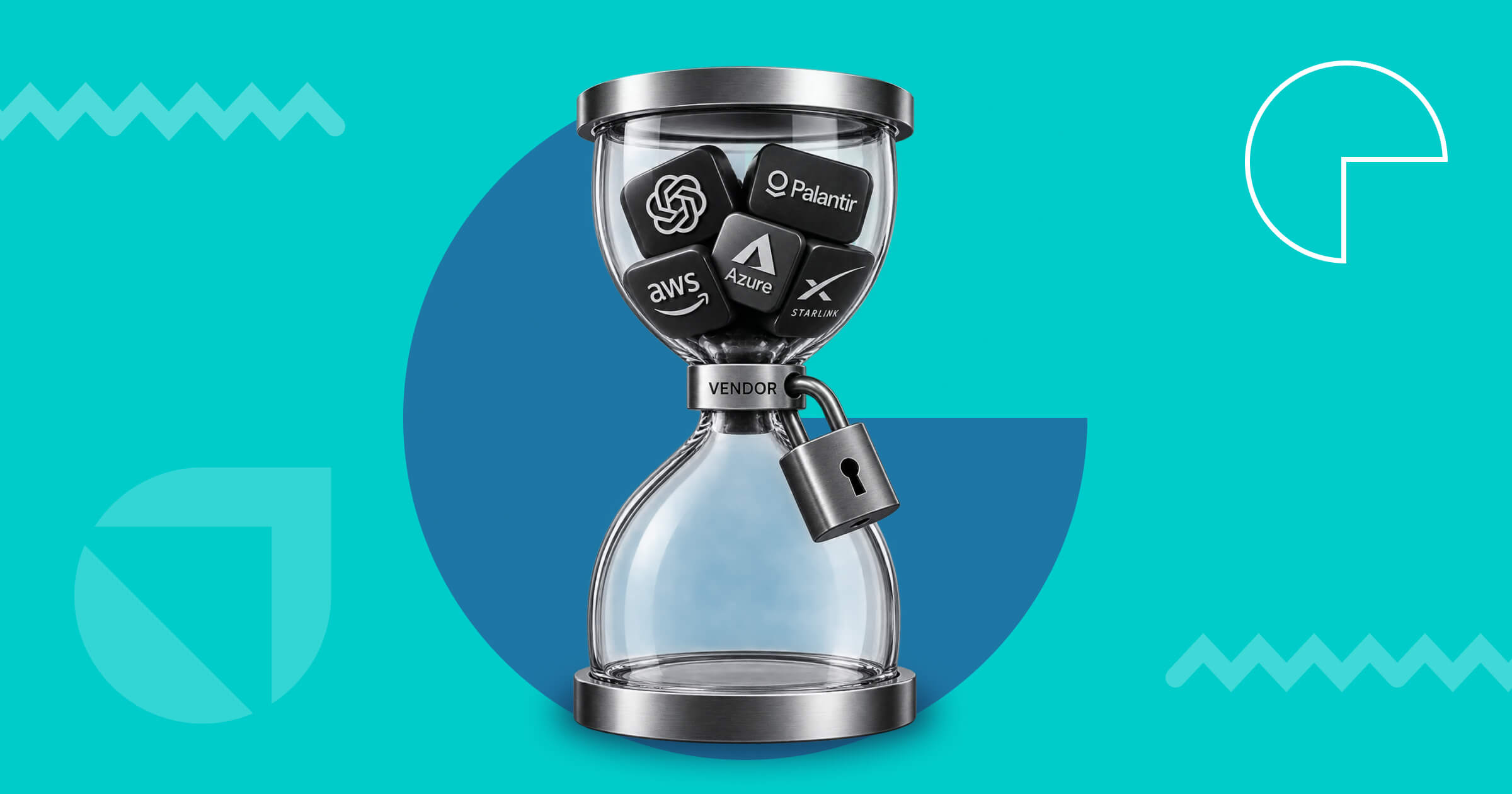
Off-the-shelf agentic AI security platforms work for prototypes and internal tools with low risk. Regulated enterprises need custom controls for specific compliance requirements, integration with existing identity systems, and audit trails that match internal standards.
The decision comes down to one question: does a vendor's control map to a specific regulatory requirement you need to satisfy? If yes, buy it. If no, build it. Do not force a vendor's generic control to fit a regulation it was not designed for.
Governance platforms like those from Gravitee and others offer API gateway controls, logging, and policy enforcement. They handle the plumbing, but regulated enterprises often need custom identity integration, specific audit log formats, and approval workflows that match internal procurement processes.
At NineTwoThree, we build custom governance layers because every client's compliance requirements are different. Consumer Reports needed a 10x safety guardrail lift to handle 90 years of trusted data. For CISCRP, compliance had to be built into a system that cut writing time by 90%.
Off-the-shelf platforms do not cover these use cases.
A 30-day plan moves an agent from ungoverned prototype to audit-ready production in four weekly phases. Each phase has specific deliverables that build on the previous week.
Week 1 establishes the foundation. Each agent gets its own identity, and tool permissions are scoped to what the agent actually needs. This week also sets up the credential vault and documents the revocation plan for when an agent needs to be decommissioned.
Week 2 adds the control layer. The human-in-the-loop policy defines which actions need approval and which can proceed automatically. Evaluation gates are configured to run automatically on every code change. A red-team test suite covers prompt injection, tool call validation, PII leakage, and boundary testing.
Week 3 builds the observability layer. The logging pipeline captures every decision, tool call, and output. The audit dashboard gives reviewers a view of agent activity over time.
Alert thresholds flag anomalous behavior before it becomes an incident.
Week 4 is about readiness. The kill switch is tested end-to-end. An incident response drill walks through the full procedure. Compliance documentation maps each control to the relevant regulation, and a security review confirms the framework is audit-ready.
NineTwoThree track record: 97% project success rate • 24 of 27 projects ROI-positive • Consumer Reports 10x safety guardrail lift • CISCRP 90% less writing time with compliance • K&L Wines 14+ hours/day saved at 99% accuracy
AI agent governance is the architecture that determines whether your agent reaches production. Teams that build controls into the agent from day one pass governance reviews. Teams that bolt them on afterwards are the 40% whose projects get canceled.
If you are shipping agents into regulated environments, talk to NineTwoThree about building a governance framework that fits your compliance requirements. Or download our Effective Guardrails for Your GenAI Apps guide to start building controls before your next agent goes live.