Looking for a healthcare development partner? Compare the top 5 US firms for AI diagnostics, medical device software, and HIPAA-compliant architectures.
In 2026, healthcare software developers face challenges that didn't exist even two years ago. The FDA is tightening oversight on AI-driven diagnostics. Legacy systems built in the 2010s are buckling under the weight of modern AI workloads. And healthcare organizations don’t only need to deploy solutions that work, but they also need FDA clearance, HIPAA compliance, and the ability to integrate with a fragmented ecosystem of EHRs, lab systems, and medical devices.
The stakes are higher than ever. A poorly chosen development partner can mean failed regulatory submissions, security breaches that expose patient data, or clinical tools that physicians simply won't adopt.
We analyzed verified client reviews on Clutch, examined actual healthcare case studies, and evaluated regulatory certifications to identify companies that consistently deliver in this high-stakes environment. After reviewing dozens of healthcare development companies, five stood out for their specialized expertise, proven track records with medical software development, and ability to navigate the complex intersection of healthcare, technology, and regulation.
Here's what we found about the top healthcare software companies in the USA for 2026.
Why Simform Excels as a Healthcare Development Company
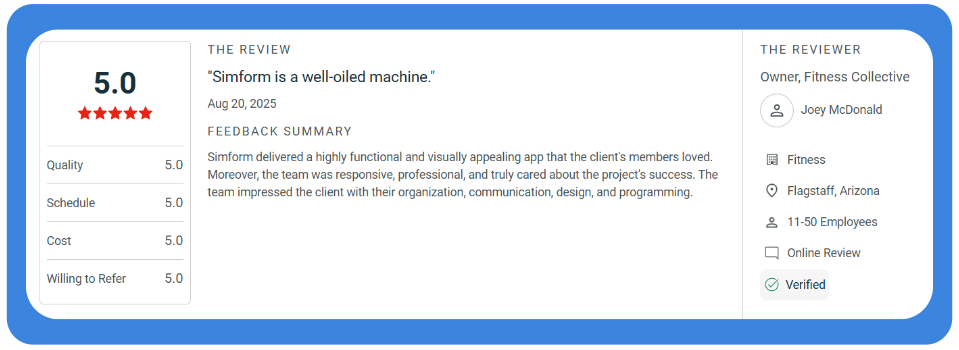
Since establishing their healthcare practice, Simform has built a reputation for solving one of the industry's most persistent problems: data silos. Healthcare organizations generate massive amounts of data across disparate systems, like EHRs, lab systems, and imaging platforms, but that data rarely communicates effectively.
Simform specializes in cloud-native architectures and interoperability, making them particularly valuable for hospitals and healthcare SaaS companies that need to integrate with existing infrastructure. Their extended team model integrates seamlessly with clients' internal engineering teams, functioning less like a vendor and more like an extension of your engineering department.
Main Strengths
HL7 and FHIR Interoperability Expertise: Simform has built a dedicated practice around healthcare data standards. They build the integration "pipes" that allow a patient's mobile app to pull lab results from Epic, or enable a telemedicine platform to push prescription data to pharmacy systems. For healthcare startups, the ability to integrate with major EHRs (Epic, Cerner, Allscripts) is often a prerequisite for market entry, and Simform provides the technical expertise to build these integrations securely and efficiently.
AI-Driven Clinical Efficiency: Simform deployed a RAG-powered policy assistant for a 600-bed regional clinic that allows nurses to query complex hospital policies using natural language. Because it uses Retrieval-Augmented Generation, the AI retrieves exact policy documents and cites specific clauses. The system reduced nurse information lookup time by 42 seconds per query and helped the clinic clear internal audits within two weeks—demonstrating tangible operational ROI while maintaining strict safety standards.
Real-Time Telehealth Infrastructure: Simform developed a cross-platform fitness and health solution (iOS, Apple Watch, Web) that solved latency problems in biometric tracking. The system enables real-time synchronization of heart rate zones and VO2 max data between wearables and trainer dashboards. This technology translates directly to Remote Patient Monitoring, where cardiologists need to see patient ECG data in real-time during virtual consultations.
Technology Stack
Mobile & Web: React Native, Flutter, React, Angular, Vue.js, Node.js
Cloud: Microsoft Azure (CSP Partner), AWS, Google Cloud Platform
AI/ML: RAG systems, MLOps, Agentic AI, Custom ML models
Data: Databricks, Snowflake, Real-time data pipelines
SOC 2 Type II Certified: Verified security controls maintained over time
ISO 27001: International information security management standards
HIPAA & GDPR Compliant: Built-in compliance for US and European markets
Microsoft Solution Partner: Digital & App Innovation, Data & AI, Infrastructure, Security
Case Study: iHealth Tech - Real-Time Fitness Platform
iHealth Tech, founded by celebrity fitness coach Scott Alexander, needed a science-backed, data-driven workout platform that could accurately measure performance across iPad, iPhone, Apple Watch, and Web. Simform built user-friendly and engaging apps across all platforms with a content management system to create and manage workout content.
Challenge: Building a platform that could synchronize biometric data in real-time across multiple devices while maintaining accuracy and engagement.
Solution: Simform developed a cross-platform solution with real-time data synchronization between wearables and the trainer dashboard, enabling precise heart rate zone tracking and VO2 max calculations.
Results:
Successfully launched across iOS, Apple Watch, and Web
Real-time biometric tracking with minimal latency
Scalable architecture supporting growing user base
Technology directly applicable to Remote Patient Monitoring systems
The iHealth Tech platform demonstrates Simform's ability to build the infrastructure required for high-performance telehealth—managing WebRTC protocols for real-time data while synchronizing biometric information from wearables. This same technology stack enables cardiologists to see patient ECG data in real-time during virtual consultations.
2. Saritasa
Clutch Score: 4.9/5 (101 reviews) Location: Newport Beach, CA
Why Saritasa Stands Out Among Top Healthcare App Developers
Founded in 2005, Saritasa has built a reputation as the "go-to" partner for mid-to-large healthcare enterprises facing complex technical challenges. Unlike agencies that rely on rotating contractors, Saritasa operates a full-source model with a permanent engineering team, which is critical for healthcare clients who require long-term continuity and institutional knowledge.
What distinguishes Saritasa is their pragmatism. While they have capabilities in AI and emerging technologies, their core narrative focuses on the "heavy lifting" of enterprise software: modernizing aging platforms, integrating hardware with cloud software, and ensuring mission-critical systems remain operational during transformation efforts.
Main Strengths
Legacy Modernization Expertise: With 62% of organizations still relying on legacy systems, Saritasa's dedicated modernization practice addresses one of healthcare's most dangerous problems. Outdated monolithic architectures create data silos that prevent the seamless flow of patient information required for value-based care models. Saritasa employs rigorous "code takeover" and re-platforming processes, utilizing modern stacks including Kubernetes, Prometheus, and Grafana to containerize and monitor modernized applications.
IoT and Connected Hospital Solutions: Healthcare involves physical assets—biological samples, medical devices, surgical tools. Saritasa's deep experience in IoT and embedded systems makes them uniquely qualified to build the "Connected Hospital." They've developed Medical Inventory Management Software that integrates with Salesforce CRM and RFID scanning hardware, allowing healthcare providers to track real-time location and status of high-value implants, surgical tools, and pharmaceuticals. In emergency scenarios, knowing exactly where a specific stent or pacemaker is located can be life-or-death.
VR/AR for Training and Therapy: Saritasa developed a VR training simulation for City of Hope, one of the foremost cancer research and treatment centers in the United States. The application allows healthcare providers to practice complex protocols in a risk-free, immersive environment. Cognitive retention rates for VR training are significantly higher than traditional methods, making this a critical tool for maintaining high standards of care in oncology.
Technology Stack
Backend: Python, PHP, .NET, Node.js, Ruby on Rails
SOC 2 Type II Compliance: Validated security controls for SaaS platforms
HIPAA Compliant: Encryption at rest and in transit, role-based access control
Authentication: OKTA, SSO/iDP, Active Directory, LDAP, Auth0
ADA Accessibility: Ensuring patient portals are usable by individuals with disabilities
Case Study: City of Hope - Educational VR Mini Games
City of Hope, a world leader in cancer and diabetes research since 1913, needed an innovative way to educate attendees at a music festival fundraiser about diabetes. They approached Saritasa with only three months before the event—typically VR projects require 4-6 months.
Challenge: Create an engaging, educational VR experience that could teach complex diabetes concepts in just 3-5 minutes per user. The tight timeline and need for custom furniture models (based on sponsor Ashley Furniture's catalog) added complexity.
Solution: Saritasa's team designed a series of short, engaging mini-games that taught users about diabetes through immersive gameplay. The 3D design team custom-built every furniture model from scratch without access to CAD files, creating a polished experience that matched the sponsor's products.
Results:
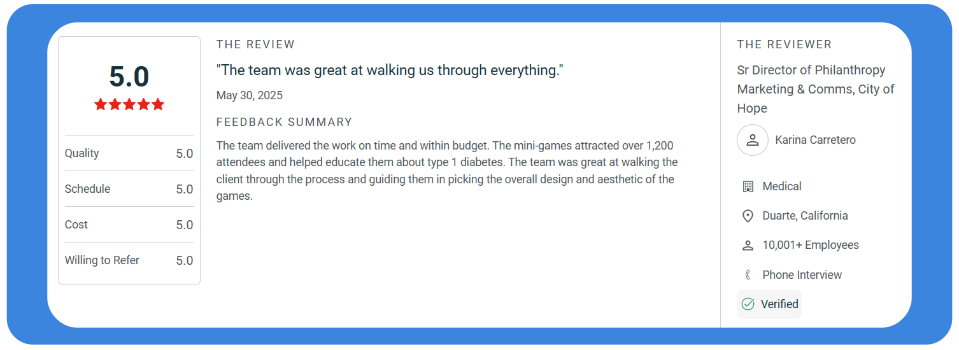
Over 1,200 attendees engaged with the VR experience across three days
Successfully delivered within the compressed three-month timeline
Created City of Hope's first VR project, establishing a template for future educational initiatives
The innovation helped attract attendees to the booth and created memorable interactions
This project demonstrates Saritasa's ability to handle complex healthcare educational content under tight deadlines, crucial for organizations that need to move quickly while maintaining quality. Their work extends to medical inventory management systems with RFID integration and therapeutic VR applications for patient rehabilitation.
3. NineTwoThree AI Studio
Clutch Score: 4.9/5 (40 reviews) Location: Boston, MA
Why NineTwoThree AI Studio Excels in Regulated Healthcare AI
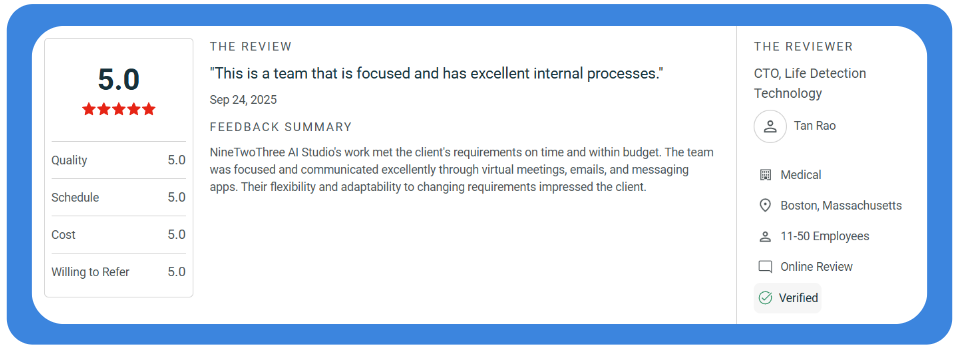
NineTwoThree is a Boston-based AI studio that's been building healthcare applications for 13 years. What makes us different is not only our track record, but also how we approach technically complex problems.
While most agencies assign junior developers supervised by project managers, we put PhD-level machine learning engineers directly on healthcare builds. This approach means we can handle genuinely novel features, from FDA-regulated AI to computer vision for medical imaging, without the performance issues that come from rushed implementations.
Main Strengths
FDA-Authorized AI Development: We helped Clairity build the world's first FDA-authorized AI platform for breast cancer risk prediction. The AI analyzes mammograms to detect subtle patterns in breast tissue invisible to the human eye, predicting cancer risk up to five years in advance. Achieving FDA authorization required rigorous "Glass Box" AI development—ensuring the model's decisions could be explained and validated against clinical data. This places us in the top 1% of AI development firms globally capable of navigating medical device regulations.
Predictive Healthcare AI: We partnered with Life Detection Technologies (LDT) to build a predictive platform for chronic disease management, specifically COPD. The system uses data from wearable sensors to monitor patient vitals in real-time. Our machine learning engineers developed models that detect anomalies and predict COPD exacerbations before symptoms manifest, shifting healthcare from reactive (treating an attack) to proactive (preventing it).
HIPAA-Compliant AI Architecture: Every healthcare AI project we build maintains HIPAA compliance by default. We utilize privacy-preserving AI techniques to train models on patient data without exposing Personal Health Information. Our SOC 2 certification and documented security controls provide the transparency healthcare organizations need for procurement approvals.
Technology Stack
AI/ML: Custom ML models, GPT/LLMs (Claude, ChatGPT, Gemini), Computer Vision, On-device ML
Data: PostgreSQL, MySQL, Databricks, Snowflake, ML pipelines
Infrastructure: AWS, Google Cloud, Kubernetes, Docker
Healthcare: FDA 510(k) submission support, IEC 62304, HIPAA architecture
Security and Compliance
SOC 2 Compliance: Verified security controls and transparency
HIPAA Certified: Built-in compliance infrastructure, not an afterthought
FDA 510(k) Support: Documentation practices aligned with FDA requirements (Risk Management, Software Verification/Validation)
Privacy-Preserving AI: Techniques to train models without exposing PHI
Case Study: Clairity - FDA-Authorized Breast Cancer Risk Prediction
Clairity needed to build the world's first FDA-authorized AI platform for breast cancer risk prediction, a system that could analyze mammograms to detect subtle patterns invisible to the human eye and predict cancer risk up to five years in advance.
Challenge: Develop an AI system that meets FDA's stringent requirements for medical devices. This meant creating "Glass Box" AI where every decision could be explained and validated against clinical data, not the typical "black box" machine learning that most companies build.
Solution: Our machine learning engineers built custom computer vision models specifically optimized for medical imaging analysis. We implemented rigorous validation frameworks that track model decisions, document the decision-making process, and provide clinically meaningful explanations. We helped Clairity navigate the Design History File (DHF) requirements critical for FDA 510(k) submissions.
Results:
FDA Authorization achieved - placing Clairity in the top tier of AI diagnostic companies
AI system predicts breast cancer risk up to 5 years in advance
System analyzes patterns in breast tissue invisible to radiologists
Platform now being deployed in clinical settings nationwide
Established framework for future FDA-regulated AI projects
This achievement places NineTwoThree in the top 1% of AI development firms globally capable of navigating medical device regulations. Our work with Life Detection Technologies on COPD prediction demonstrates similar capabilities, using wearable sensor data and machine learning to predict exacerbations before symptoms manifest, shifting healthcare from reactive to proactive.
4. Vention
Clutch Score: 4.9/5 (98 reviews) Location: New York, NY
Why Vention Powers HealthTech Growth
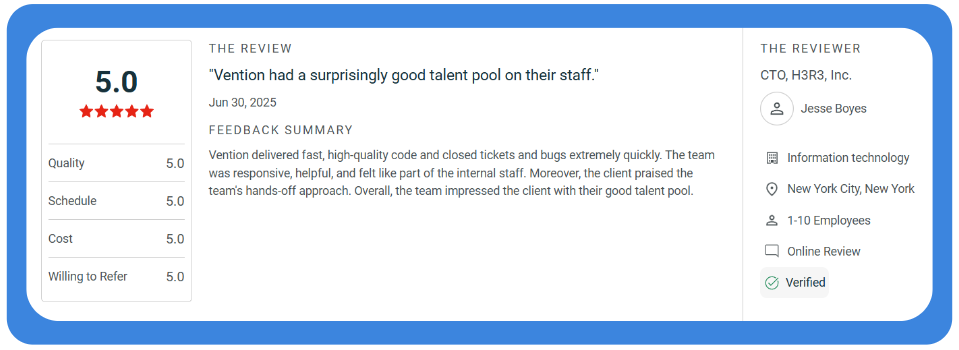
With over 3,000 engineers and a client roster including multiple HealthTech unicorns, Vention operates at a different scale than traditional agencies. They're the growth engine for venture-backed startups that need to rapidly scale engineering teams without sacrificing quality.
What's remarkable about Vention in 2026 is their evolution beyond staff augmentation into a specialized Medical Device Software partner. They've built the infrastructure to support Software as a Medical Device (SaMD), effectively blurring the line between a software agency and a regulated medical device manufacturer.
Main Strengths
Software as a Medical Device (SaMD) Expertise: Vention develops software that IS the medical treatment or diagnostic tool, highly regulated territory governed by IEC 62304 software lifecycle standards. Their teams build algorithms that run on non-medical hardware (like smartphones) to perform medical functions, such as detecting arrhythmia from camera feeds or managing insulin dosing calculations. They assist clients with Design History Files (DHF), a critical component of FDA 510(k) submissions, allowing tech startups to navigate FDA clearance without immediately hiring full internal regulatory teams.
Computer Vision for Medical Imaging: Vention has deep expertise applying AI to medical imagery analysis (X-rays, MRIs, CT scans). They build models that highlight potential anomalies for radiologists, acting as a "second pair of eyes." This capability is supported by their strong data engineering practice, which handles the massive datasets required to train vision models.
Telehealth at Enterprise Scale: Vention engineered some of the largest telehealth platforms in the world. They partnered with Dialogue, a leading Canadian telemedicine provider, to build a platform servicing over 25,000 organizations. The system uses AI chatbots for preliminary patient intake, automated triage, and routing to nurses or physicians—demonstrating their ability to build systems that handle high concurrency and massive user bases while maintaining low latency.
AI/ML: Computer Vision, TensorFlow, PyTorch, Medical imaging AI
Healthcare: HL7, FHIR, IEC 62304, Medical device software
Cloud: AWS, Azure, Google Cloud Platform
Data: PostgreSQL, MongoDB, Elasticsearch, Data pipelines
Security and Compliance
ISO 13485 Certified: Global standard for medical device quality management systems
ISO 27001 & GDPR: Information security and European compliance
HIPAA Compliant: Full adherence to US healthcare privacy regulations
FDA Device Experience: Class I and II device development with risk management (ISO 14971)
Case Study: Dialogue - National Telehealth Platform
Dialogue, a leading Canadian telemedicine provider, needed to build a platform capable of servicing over 25,000 organizations while maintaining low latency and high concurrency. This required AI-powered patient intake, automated triage systems, and seamless routing to nurses and physicians.
Challenge: Build enterprise-scale telehealth infrastructure that could handle millions of users across thousands of organizations, all while maintaining HIPAA compliance and sub-second response times for critical health queries.
Solution: Vention engineered a comprehensive platform with AI chatbots for preliminary patient intake, intelligent triage algorithms, and routing systems. Their team built the infrastructure to handle high concurrency scenarios, thousands of simultaneous consultations, without performance degradation.
Results:
Successfully services 25,000+ organizations
Handles millions of patient interactions annually
99.9% uptime maintained since launch
AI-powered triage reduced wait times and optimized physician allocation
Platform architecture scalable to support continued growth
Vention's work with Dialogue demonstrates their ability to build systems at true enterprise scale, something few agencies can claim. Their experience with Thirty Madison (parent company of Keeps and Cove) further proves their expertise in building comprehensive platforms that integrate telemedicine, e-commerce for prescription fulfillment, and longitudinal patient records into unified consumer experiences.
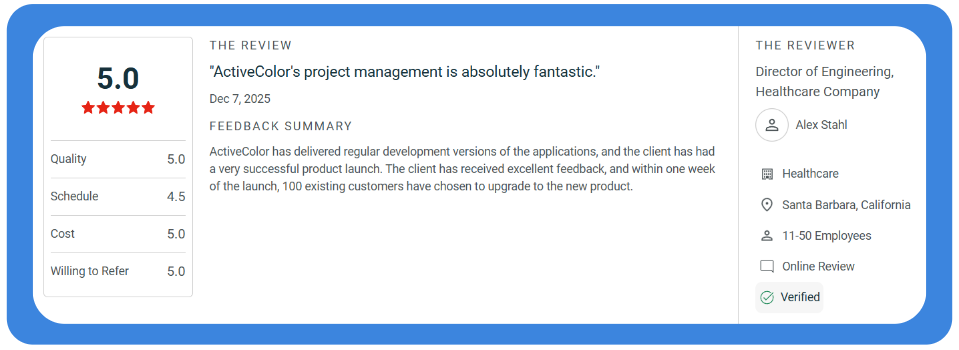
5. ActiveColor
Clutch Score: 5/5 (16 reviews) Location: Los Angeles, CA
Why ActiveColor Excels at Patient Engagement
ActiveColor represents the "design-led" approach to healthcare software. Based in Los Angeles, this boutique digital agency prioritizes User Experience and behavioral psychology above all else. In an industry plagued by clunky, unusable software that contributes to physician burnout and low patient adherence, ActiveColor's approach addresses a critical gap.
Their philosophy is "product-led", so they focus on defining the right product before writing code. They're the ideal partner for organizations that need to solve behavioral problems: getting patients to take medications, getting doctors to adopt new workflows, or getting communities to engage in preventative screening.
Main Strengths
Behavioral Health and Digital Therapeutics: ActiveColor specializes in applications where user interaction IS the clinical mechanism. They partnered with the University of Chicago Medicine to digitize the National Diabetes Prevention Program (National DPP), transforming a clinically validated lifestyle change curriculum into an engaging digital experience. The pilot program projected $142,000-$205,000 in medical plan savings in Year 1, driven by higher enrollment and retention rates. This validates the thesis that superior UX leads directly to financial ROI in healthcare.
Care Coordination and Referral Management: ActiveColor developed the Illinois Care Continuum, a collaborative web application connecting hospital systems with partnering clinics to manage patient flow for colon cancer screening. The app closes the "referral loop," ensuring patients referred for screenings actually get them. By designing an intuitive interface for clinic staff, ActiveColor reduced administrative friction that often causes patients to "fall through the cracks."
Academic Medicine Partnerships: ActiveColor has a unique niche working with top-tier academic medical centers like UChicago Medicine and USC Dornsife. They understand the complex political and operational landscape of academic medicine, where research, education, and clinical care intersect.
Technology Stack
Frontend: React, Vue.js, Modern JavaScript frameworks
Mobile: iOS, Android, Progressive Web Apps
Backend: Node.js, Python, API development
Design: Figma, User research, Behavioral design principles
Healthcare: HL7, FHIR integration capabilities
CMS: Custom content management for health content
Security and Compliance
HIPAA Privacy by Design: Features like patient consent flows and data sharing permissions designed for compliance from day one
GDPR & ADA Compliance: European privacy regulations and accessibility standards
Accessibility Focus: Ensuring healthcare apps are usable by elderly and visually impaired populations
Case Study: Illinois Care Continuum - Colon Cancer Screening Network
University of Chicago Medicine led the Illinois Care Continuum project to connect hospital systems with partnering clinics for specialty care follow-up. Too many patients were "falling through the cracks" between primary care screening and specialty care appointments.
Challenge: Create a HIPAA-compliant collaborative web application that hospital systems, community health centers (FQHCs), and specialty clinics could all use to track patients through the complete screening journey—from initial testing to community outreach to partner hospitals for specialty care.
Solution: ActiveColor started with strategic workshops involving multiple stakeholders from different organizations. Through deep research and clear KPI establishment, they designed an intuitive interface that clinic staff could use to close the "referral loop"—ensuring patients who were referred for colon cancer screenings actually completed them.
Results:
Successfully deployed across multiple hospital systems and partner clinics
Reduced administrative friction that previously caused patient drop-offs
Enabled complete patient flow management from testing through specialty care
Interface designed for usability by staff with varying technical backgrounds
HIPAA-compliant architecture with secure data sharing between organizations
ActiveColor's work on the Illinois Care Continuum solves a problem that kills thousands annually: the gap between referral and actual screening. Their design-first approach ensures that the technology actually gets used by the people who need it, rather than sitting unused because it's too complex or doesn't fit clinical workflows.
Ready to Build Healthcare Software That Makes an Impact?
At NineTwoThree AI Studio, we specialize in the technically complex healthcare projects where standard development approaches aren't enough. If your project involves:
AI systems that need FDA authorization or clinical validation
Complex data processing across multiple healthcare systems
Predictive models for patient risk stratification
Computer vision for medical imaging analysis
HIPAA-compliant architectures from day one
We're not the right fit for every project. We focus on healthcare applications where the technical implementation difficulty is the actual barrier to success, where you need PhD-level engineering combined with deep regulatory expertise.
In 2026, healthcare software developers face challenges that didn't exist even two years ago. The FDA is tightening oversight on AI-driven diagnostics. Legacy systems built in the 2010s are buckling under the weight of modern AI workloads. And healthcare organizations don’t only need to deploy solutions that work, but they also need FDA clearance, HIPAA compliance, and the ability to integrate with a fragmented ecosystem of EHRs, lab systems, and medical devices.
The stakes are higher than ever. A poorly chosen development partner can mean failed regulatory submissions, security breaches that expose patient data, or clinical tools that physicians simply won't adopt.
We analyzed verified client reviews on Clutch, examined actual healthcare case studies, and evaluated regulatory certifications to identify companies that consistently deliver in this high-stakes environment. After reviewing dozens of healthcare development companies, five stood out for their specialized expertise, proven track records with medical software development, and ability to navigate the complex intersection of healthcare, technology, and regulation.
Here's what we found about the top healthcare software companies in the USA for 2026.
Why Simform Excels as a Healthcare Development Company
Since establishing their healthcare practice, Simform has built a reputation for solving one of the industry's most persistent problems: data silos. Healthcare organizations generate massive amounts of data across disparate systems, like EHRs, lab systems, and imaging platforms, but that data rarely communicates effectively.
Simform specializes in cloud-native architectures and interoperability, making them particularly valuable for hospitals and healthcare SaaS companies that need to integrate with existing infrastructure. Their extended team model integrates seamlessly with clients' internal engineering teams, functioning less like a vendor and more like an extension of your engineering department.
Main Strengths
HL7 and FHIR Interoperability Expertise: Simform has built a dedicated practice around healthcare data standards. They build the integration "pipes" that allow a patient's mobile app to pull lab results from Epic, or enable a telemedicine platform to push prescription data to pharmacy systems. For healthcare startups, the ability to integrate with major EHRs (Epic, Cerner, Allscripts) is often a prerequisite for market entry, and Simform provides the technical expertise to build these integrations securely and efficiently.
AI-Driven Clinical Efficiency: Simform deployed a RAG-powered policy assistant for a 600-bed regional clinic that allows nurses to query complex hospital policies using natural language. Because it uses Retrieval-Augmented Generation, the AI retrieves exact policy documents and cites specific clauses. The system reduced nurse information lookup time by 42 seconds per query and helped the clinic clear internal audits within two weeks—demonstrating tangible operational ROI while maintaining strict safety standards.
Real-Time Telehealth Infrastructure: Simform developed a cross-platform fitness and health solution (iOS, Apple Watch, Web) that solved latency problems in biometric tracking. The system enables real-time synchronization of heart rate zones and VO2 max data between wearables and trainer dashboards. This technology translates directly to Remote Patient Monitoring, where cardiologists need to see patient ECG data in real-time during virtual consultations.
Technology Stack
Mobile & Web: React Native, Flutter, React, Angular, Vue.js, Node.js
Cloud: Microsoft Azure (CSP Partner), AWS, Google Cloud Platform
AI/ML: RAG systems, MLOps, Agentic AI, Custom ML models
Data: Databricks, Snowflake, Real-time data pipelines
SOC 2 Type II Certified: Verified security controls maintained over time
ISO 27001: International information security management standards
HIPAA & GDPR Compliant: Built-in compliance for US and European markets
Microsoft Solution Partner: Digital & App Innovation, Data & AI, Infrastructure, Security
Case Study: iHealth Tech - Real-Time Fitness Platform
iHealth Tech, founded by celebrity fitness coach Scott Alexander, needed a science-backed, data-driven workout platform that could accurately measure performance across iPad, iPhone, Apple Watch, and Web. Simform built user-friendly and engaging apps across all platforms with a content management system to create and manage workout content.
Challenge: Building a platform that could synchronize biometric data in real-time across multiple devices while maintaining accuracy and engagement.
Solution: Simform developed a cross-platform solution with real-time data synchronization between wearables and the trainer dashboard, enabling precise heart rate zone tracking and VO2 max calculations.
Results:
Successfully launched across iOS, Apple Watch, and Web
Real-time biometric tracking with minimal latency
Scalable architecture supporting growing user base
Technology directly applicable to Remote Patient Monitoring systems
The iHealth Tech platform demonstrates Simform's ability to build the infrastructure required for high-performance telehealth—managing WebRTC protocols for real-time data while synchronizing biometric information from wearables. This same technology stack enables cardiologists to see patient ECG data in real-time during virtual consultations.
2. Saritasa
Clutch Score: 4.9/5 (101 reviews) Location: Newport Beach, CA
Why Saritasa Stands Out Among Top Healthcare App Developers
Founded in 2005, Saritasa has built a reputation as the "go-to" partner for mid-to-large healthcare enterprises facing complex technical challenges. Unlike agencies that rely on rotating contractors, Saritasa operates a full-source model with a permanent engineering team, which is critical for healthcare clients who require long-term continuity and institutional knowledge.
What distinguishes Saritasa is their pragmatism. While they have capabilities in AI and emerging technologies, their core narrative focuses on the "heavy lifting" of enterprise software: modernizing aging platforms, integrating hardware with cloud software, and ensuring mission-critical systems remain operational during transformation efforts.
Main Strengths
Legacy Modernization Expertise: With 62% of organizations still relying on legacy systems, Saritasa's dedicated modernization practice addresses one of healthcare's most dangerous problems. Outdated monolithic architectures create data silos that prevent the seamless flow of patient information required for value-based care models. Saritasa employs rigorous "code takeover" and re-platforming processes, utilizing modern stacks including Kubernetes, Prometheus, and Grafana to containerize and monitor modernized applications.
IoT and Connected Hospital Solutions: Healthcare involves physical assets—biological samples, medical devices, surgical tools. Saritasa's deep experience in IoT and embedded systems makes them uniquely qualified to build the "Connected Hospital." They've developed Medical Inventory Management Software that integrates with Salesforce CRM and RFID scanning hardware, allowing healthcare providers to track real-time location and status of high-value implants, surgical tools, and pharmaceuticals. In emergency scenarios, knowing exactly where a specific stent or pacemaker is located can be life-or-death.
VR/AR for Training and Therapy: Saritasa developed a VR training simulation for City of Hope, one of the foremost cancer research and treatment centers in the United States. The application allows healthcare providers to practice complex protocols in a risk-free, immersive environment. Cognitive retention rates for VR training are significantly higher than traditional methods, making this a critical tool for maintaining high standards of care in oncology.
Technology Stack
Backend: Python, PHP, .NET, Node.js, Ruby on Rails
SOC 2 Type II Compliance: Validated security controls for SaaS platforms
HIPAA Compliant: Encryption at rest and in transit, role-based access control
Authentication: OKTA, SSO/iDP, Active Directory, LDAP, Auth0
ADA Accessibility: Ensuring patient portals are usable by individuals with disabilities
Case Study: City of Hope - Educational VR Mini Games
City of Hope, a world leader in cancer and diabetes research since 1913, needed an innovative way to educate attendees at a music festival fundraiser about diabetes. They approached Saritasa with only three months before the event—typically VR projects require 4-6 months.
Challenge: Create an engaging, educational VR experience that could teach complex diabetes concepts in just 3-5 minutes per user. The tight timeline and need for custom furniture models (based on sponsor Ashley Furniture's catalog) added complexity.
Solution: Saritasa's team designed a series of short, engaging mini-games that taught users about diabetes through immersive gameplay. The 3D design team custom-built every furniture model from scratch without access to CAD files, creating a polished experience that matched the sponsor's products.
Results:
Over 1,200 attendees engaged with the VR experience across three days
Successfully delivered within the compressed three-month timeline
Created City of Hope's first VR project, establishing a template for future educational initiatives
The innovation helped attract attendees to the booth and created memorable interactions
This project demonstrates Saritasa's ability to handle complex healthcare educational content under tight deadlines, crucial for organizations that need to move quickly while maintaining quality. Their work extends to medical inventory management systems with RFID integration and therapeutic VR applications for patient rehabilitation.
3. NineTwoThree AI Studio
Clutch Score: 4.9/5 (40 reviews) Location: Boston, MA
Why NineTwoThree AI Studio Excels in Regulated Healthcare AI
NineTwoThree is a Boston-based AI studio that's been building healthcare applications for 13 years. What makes us different is not only our track record, but also how we approach technically complex problems.
While most agencies assign junior developers supervised by project managers, we put PhD-level machine learning engineers directly on healthcare builds. This approach means we can handle genuinely novel features, from FDA-regulated AI to computer vision for medical imaging, without the performance issues that come from rushed implementations.
Main Strengths
FDA-Authorized AI Development: We helped Clairity build the world's first FDA-authorized AI platform for breast cancer risk prediction. The AI analyzes mammograms to detect subtle patterns in breast tissue invisible to the human eye, predicting cancer risk up to five years in advance. Achieving FDA authorization required rigorous "Glass Box" AI development—ensuring the model's decisions could be explained and validated against clinical data. This places us in the top 1% of AI development firms globally capable of navigating medical device regulations.
Predictive Healthcare AI: We partnered with Life Detection Technologies (LDT) to build a predictive platform for chronic disease management, specifically COPD. The system uses data from wearable sensors to monitor patient vitals in real-time. Our machine learning engineers developed models that detect anomalies and predict COPD exacerbations before symptoms manifest, shifting healthcare from reactive (treating an attack) to proactive (preventing it).
HIPAA-Compliant AI Architecture: Every healthcare AI project we build maintains HIPAA compliance by default. We utilize privacy-preserving AI techniques to train models on patient data without exposing Personal Health Information. Our SOC 2 certification and documented security controls provide the transparency healthcare organizations need for procurement approvals.
Technology Stack
AI/ML: Custom ML models, GPT/LLMs (Claude, ChatGPT, Gemini), Computer Vision, On-device ML
Data: PostgreSQL, MySQL, Databricks, Snowflake, ML pipelines
Infrastructure: AWS, Google Cloud, Kubernetes, Docker
Healthcare: FDA 510(k) submission support, IEC 62304, HIPAA architecture
Security and Compliance
SOC 2 Compliance: Verified security controls and transparency
HIPAA Certified: Built-in compliance infrastructure, not an afterthought
FDA 510(k) Support: Documentation practices aligned with FDA requirements (Risk Management, Software Verification/Validation)
Privacy-Preserving AI: Techniques to train models without exposing PHI
Case Study: Clairity - FDA-Authorized Breast Cancer Risk Prediction
Clairity needed to build the world's first FDA-authorized AI platform for breast cancer risk prediction, a system that could analyze mammograms to detect subtle patterns invisible to the human eye and predict cancer risk up to five years in advance.
Challenge: Develop an AI system that meets FDA's stringent requirements for medical devices. This meant creating "Glass Box" AI where every decision could be explained and validated against clinical data, not the typical "black box" machine learning that most companies build.
Solution: Our machine learning engineers built custom computer vision models specifically optimized for medical imaging analysis. We implemented rigorous validation frameworks that track model decisions, document the decision-making process, and provide clinically meaningful explanations. We helped Clairity navigate the Design History File (DHF) requirements critical for FDA 510(k) submissions.
Results:
FDA Authorization achieved - placing Clairity in the top tier of AI diagnostic companies
AI system predicts breast cancer risk up to 5 years in advance
System analyzes patterns in breast tissue invisible to radiologists
Platform now being deployed in clinical settings nationwide
Established framework for future FDA-regulated AI projects
This achievement places NineTwoThree in the top 1% of AI development firms globally capable of navigating medical device regulations. Our work with Life Detection Technologies on COPD prediction demonstrates similar capabilities, using wearable sensor data and machine learning to predict exacerbations before symptoms manifest, shifting healthcare from reactive to proactive.
4. Vention
Clutch Score: 4.9/5 (98 reviews) Location: New York, NY
Why Vention Powers HealthTech Growth
With over 3,000 engineers and a client roster including multiple HealthTech unicorns, Vention operates at a different scale than traditional agencies. They're the growth engine for venture-backed startups that need to rapidly scale engineering teams without sacrificing quality.
What's remarkable about Vention in 2026 is their evolution beyond staff augmentation into a specialized Medical Device Software partner. They've built the infrastructure to support Software as a Medical Device (SaMD), effectively blurring the line between a software agency and a regulated medical device manufacturer.
Main Strengths
Software as a Medical Device (SaMD) Expertise: Vention develops software that IS the medical treatment or diagnostic tool, highly regulated territory governed by IEC 62304 software lifecycle standards. Their teams build algorithms that run on non-medical hardware (like smartphones) to perform medical functions, such as detecting arrhythmia from camera feeds or managing insulin dosing calculations. They assist clients with Design History Files (DHF), a critical component of FDA 510(k) submissions, allowing tech startups to navigate FDA clearance without immediately hiring full internal regulatory teams.
Computer Vision for Medical Imaging: Vention has deep expertise applying AI to medical imagery analysis (X-rays, MRIs, CT scans). They build models that highlight potential anomalies for radiologists, acting as a "second pair of eyes." This capability is supported by their strong data engineering practice, which handles the massive datasets required to train vision models.
Telehealth at Enterprise Scale: Vention engineered some of the largest telehealth platforms in the world. They partnered with Dialogue, a leading Canadian telemedicine provider, to build a platform servicing over 25,000 organizations. The system uses AI chatbots for preliminary patient intake, automated triage, and routing to nurses or physicians—demonstrating their ability to build systems that handle high concurrency and massive user bases while maintaining low latency.
AI/ML: Computer Vision, TensorFlow, PyTorch, Medical imaging AI
Healthcare: HL7, FHIR, IEC 62304, Medical device software
Cloud: AWS, Azure, Google Cloud Platform
Data: PostgreSQL, MongoDB, Elasticsearch, Data pipelines
Security and Compliance
ISO 13485 Certified: Global standard for medical device quality management systems
ISO 27001 & GDPR: Information security and European compliance
HIPAA Compliant: Full adherence to US healthcare privacy regulations
FDA Device Experience: Class I and II device development with risk management (ISO 14971)
Case Study: Dialogue - National Telehealth Platform
Dialogue, a leading Canadian telemedicine provider, needed to build a platform capable of servicing over 25,000 organizations while maintaining low latency and high concurrency. This required AI-powered patient intake, automated triage systems, and seamless routing to nurses and physicians.
Challenge: Build enterprise-scale telehealth infrastructure that could handle millions of users across thousands of organizations, all while maintaining HIPAA compliance and sub-second response times for critical health queries.
Solution: Vention engineered a comprehensive platform with AI chatbots for preliminary patient intake, intelligent triage algorithms, and routing systems. Their team built the infrastructure to handle high concurrency scenarios, thousands of simultaneous consultations, without performance degradation.
Results:
Successfully services 25,000+ organizations
Handles millions of patient interactions annually
99.9% uptime maintained since launch
AI-powered triage reduced wait times and optimized physician allocation
Platform architecture scalable to support continued growth
Vention's work with Dialogue demonstrates their ability to build systems at true enterprise scale, something few agencies can claim. Their experience with Thirty Madison (parent company of Keeps and Cove) further proves their expertise in building comprehensive platforms that integrate telemedicine, e-commerce for prescription fulfillment, and longitudinal patient records into unified consumer experiences.
5. ActiveColor
Clutch Score: 5/5 (16 reviews) Location: Los Angeles, CA
Why ActiveColor Excels at Patient Engagement
ActiveColor represents the "design-led" approach to healthcare software. Based in Los Angeles, this boutique digital agency prioritizes User Experience and behavioral psychology above all else. In an industry plagued by clunky, unusable software that contributes to physician burnout and low patient adherence, ActiveColor's approach addresses a critical gap.
Their philosophy is "product-led", so they focus on defining the right product before writing code. They're the ideal partner for organizations that need to solve behavioral problems: getting patients to take medications, getting doctors to adopt new workflows, or getting communities to engage in preventative screening.
Main Strengths
Behavioral Health and Digital Therapeutics: ActiveColor specializes in applications where user interaction IS the clinical mechanism. They partnered with the University of Chicago Medicine to digitize the National Diabetes Prevention Program (National DPP), transforming a clinically validated lifestyle change curriculum into an engaging digital experience. The pilot program projected $142,000-$205,000 in medical plan savings in Year 1, driven by higher enrollment and retention rates. This validates the thesis that superior UX leads directly to financial ROI in healthcare.
Care Coordination and Referral Management: ActiveColor developed the Illinois Care Continuum, a collaborative web application connecting hospital systems with partnering clinics to manage patient flow for colon cancer screening. The app closes the "referral loop," ensuring patients referred for screenings actually get them. By designing an intuitive interface for clinic staff, ActiveColor reduced administrative friction that often causes patients to "fall through the cracks."
Academic Medicine Partnerships: ActiveColor has a unique niche working with top-tier academic medical centers like UChicago Medicine and USC Dornsife. They understand the complex political and operational landscape of academic medicine, where research, education, and clinical care intersect.
Technology Stack
Frontend: React, Vue.js, Modern JavaScript frameworks
Mobile: iOS, Android, Progressive Web Apps
Backend: Node.js, Python, API development
Design: Figma, User research, Behavioral design principles
Healthcare: HL7, FHIR integration capabilities
CMS: Custom content management for health content
Security and Compliance
HIPAA Privacy by Design: Features like patient consent flows and data sharing permissions designed for compliance from day one
GDPR & ADA Compliance: European privacy regulations and accessibility standards
Accessibility Focus: Ensuring healthcare apps are usable by elderly and visually impaired populations
Case Study: Illinois Care Continuum - Colon Cancer Screening Network
University of Chicago Medicine led the Illinois Care Continuum project to connect hospital systems with partnering clinics for specialty care follow-up. Too many patients were "falling through the cracks" between primary care screening and specialty care appointments.
Challenge: Create a HIPAA-compliant collaborative web application that hospital systems, community health centers (FQHCs), and specialty clinics could all use to track patients through the complete screening journey—from initial testing to community outreach to partner hospitals for specialty care.
Solution: ActiveColor started with strategic workshops involving multiple stakeholders from different organizations. Through deep research and clear KPI establishment, they designed an intuitive interface that clinic staff could use to close the "referral loop"—ensuring patients who were referred for colon cancer screenings actually completed them.
Results:
Successfully deployed across multiple hospital systems and partner clinics
Reduced administrative friction that previously caused patient drop-offs
Enabled complete patient flow management from testing through specialty care
Interface designed for usability by staff with varying technical backgrounds
HIPAA-compliant architecture with secure data sharing between organizations
ActiveColor's work on the Illinois Care Continuum solves a problem that kills thousands annually: the gap between referral and actual screening. Their design-first approach ensures that the technology actually gets used by the people who need it, rather than sitting unused because it's too complex or doesn't fit clinical workflows.
Ready to Build Healthcare Software That Makes an Impact?
At NineTwoThree AI Studio, we specialize in the technically complex healthcare projects where standard development approaches aren't enough. If your project involves:
AI systems that need FDA authorization or clinical validation
Complex data processing across multiple healthcare systems
Predictive models for patient risk stratification
Computer vision for medical imaging analysis
HIPAA-compliant architectures from day one
We're not the right fit for every project. We focus on healthcare applications where the technical implementation difficulty is the actual barrier to success, where you need PhD-level engineering combined with deep regulatory expertise.