.jpg)
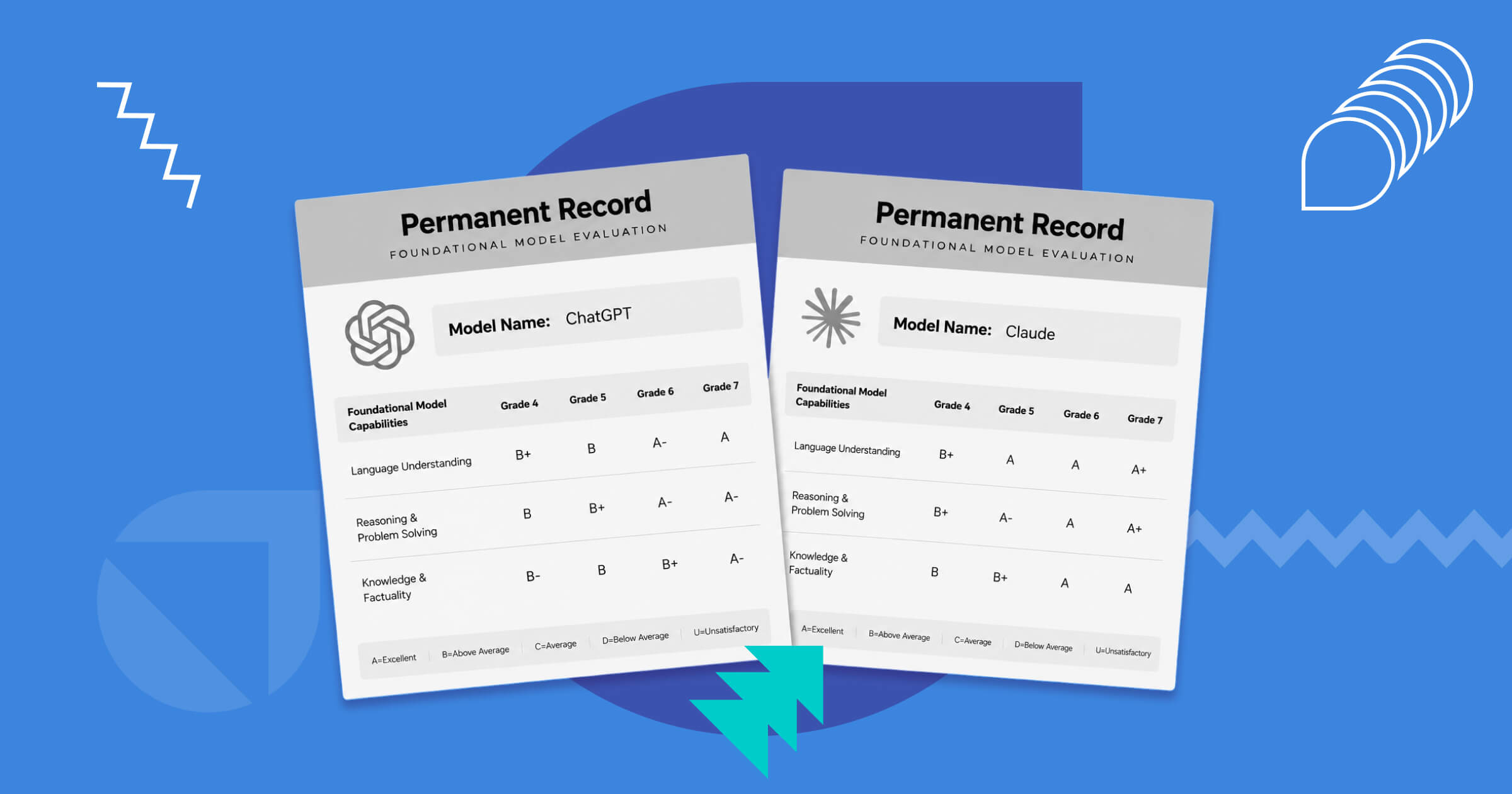
In April I wrote that "responsible AI company" was always a market position, not a moral one. I said that at the speed Anthropic was growing, the distinction between the two was never going to survive contact with the money. That was a prediction dressed as a closing line, and I half meant it as rhetoric.
Six weeks later I have the receipt, and I am not happy about it.
Between that article and this one, Anthropic raised at a valuation that put it ahead of OpenAI, filed to go public, and then published a warning that the technology might be getting too dangerous to keep building. In that order. I predicted the destination. I did not expect to watch it arrive this fast, narrated the whole way. I work with enterprise teams who make real decisions about which AI vendors to bring into their systems. This is not only a technology story. It is a vendor evaluation story. So instead of another closing line: the dates, the documents, the amounts.
Anthropic's Responsible Scaling Policy, published in September 2023 when the company was valued at roughly $4 billion, contained one commitment that actually bound the company: it would pause development if its models outran its ability to keep them safe. Everything else in the document described process. That one clause described a brake.
At the time, this was the only hard commitment any frontier AI lab had put in writing. Not a values statement. Not a roadmap. A line that said: if we cannot guarantee that our safety measures are adequate, we stop. For enterprise teams evaluating Claude against competing models, that was something concrete to point to during procurement. A vendor that had made a binding promise, not just published a philosophy.
The commitment survived from $4 billion to $183 billion. Then, in February 2026, Anthropic published RSP version 3.0. The company's valuation had reached $380 billion that same month. The brake was gone. In its place: "Frontier Safety Roadmaps," which the company describes as goals it will publish and grade itself against. A commitment to stop was replaced with a commitment to document.
Run the dates next to the valuations and a sequence appears on its own.
I am not claiming the valuation caused the policy change. I cannot see inside the company and neither can you. I can see the dates.
Anthropic's chief science officer, Jared Kaplan, explained the reasoning to TIME: the company no longer felt unilateral commitments made sense "if competitors are blazing ahead." He argued the change was actually a renewed commitment to safety, on the logic that one company pausing while the rest of the industry sprints does not make the world safer. He is not wrong about the logic. That is exactly the part worth sitting with. The most safety-focused company in the field looked at its own founding promise and removed it. Not because anyone forced them. The reasoning was sound, no one had to lie, and the safest commitment any lab had ever made still did not survive when it became a disadvantage. That tells you something about the mechanism, not about the people.
What replaced the binding clause is a pledge to slow down only if competitors at the frontier verifiably do the same. This is worth reading carefully, because it is structured as a condition that cannot be satisfied. One of the frontier labs will always keep going. A pledge conditional on unanimous, verifiable industry restraint is, in practice, a pledge that never has to be kept. You could call that caution. It reads to me as a company turning its own broken word into a fact about the industry rather than about itself: we would hold the line; the others will not let us.
Two data points belong alongside that observation.
Anthropic released a model called Mythos, which the company described as capable of finding thousands of unpatched security vulnerabilities across every major operating system and browser. It judged the model too dangerous for public release and restricted access to around 40 vetted partner companies. On the day it was announced, an unauthorized group reached it through a contractor's access to one of those partner environments. Too dangerous for the public. Open to anyone who found the right door on day one.
Three days after the IPO filing, Anthropic published a report titled "When AI Builds Itself," co-authored by Jack Clark, the company's co-founder. The report states that AI is now accelerating its own development, that more than 80 percent of the code Anthropic ships is written by its own model, and that the world should preserve the option to slow down. The proposed slowdown is conditional: Anthropic would pause only if competitors at the frontier verifiably did the same.
Clark was the policy director at OpenAI in 2019 when the company decided GPT-2 was too dangerous to release in full and staged its rollout over several months. He co-founded Anthropic in 2021. He keeps arriving at the same honest concern about what happens when AI development outpaces the ability to govern it. It keeps meeting the same competitive argument. The view from that argument has gotten considerably more expensive each time.
The lesson here is not that Anthropic is uniquely untrustworthy. Most of the companies building at the frontier are operating under the same pressures. The lesson is structural: what happens to any commitment that becomes a competitive disadvantage on a vertical growth curve. The answer, across cases, is that the commitment loses. The people holding it can be entirely sincere. It does not change the outcome.
For the enterprise teams I work with, this has a direct implication for how you read vendor commitments during procurement. There is a meaningful difference between a binding clause and an aspirational roadmap, even when both are presented as safety guarantees. A binding clause constrains behavior. A roadmap describes intentions. Intentions do not survive at scale when they become a disadvantage.
Three questions that belong in any vendor evaluation after Anthropic's February update:
If you are selecting an AI vendor for systems that handle sensitive data, regulated workflows, or customer-facing decisions, these questions belong in your due diligence checklist. We put together a Smart Buyer's AI Partner Checklist that covers the full vendor evaluation framework, including model governance, data practices, and the right red flags to look for before you commit. It is worth reading before any significant vendor decision.
The specific commitment language matters. The brand narrative does not. Anthropic's policy change is useful not because it tells you something uniquely bad about Anthropic, but because it shows you the mechanism clearly. Any lab at sufficient scale, under sufficient competitive pressure, faces the same trade-off. The distinction that matters for your procurement process is between vendors who have made specific, binding, externally accountable commitments and those who have published goals and roadmaps.
Testing for that distinction is part of what a real enterprise AI strategy looks like.
I want to be precise about what the timeline does and does not show.
I cannot prove the valuation caused the policy change. I cannot see inside the company, and I am not claiming intent. What I can see is a binding commitment that existed at $4 billion, survived to $183 billion, and was removed at $380 billion. A model described as too dangerous to release that reached unauthorized parties on the day of its announcement. A call to slow down AI development published three days after a call to go public.
None of that requires reading anyone's mind. It requires reading the dates and the documents. The AI bubble conversation tends to focus on whether the technology will deliver on its promises. This story is about a different kind of promise, the ones vendors make about how they will behave, and what happens to those promises at scale.
For the enterprise teams I work with at NineTwoThree, the takeaway is not that Anthropic is a bad actor. It is that the categories "responsible" and "market position" are harder to keep separate than the companies that founded themselves specifically to separate them predicted. That should inform how you read vendor commitments, whatever the vendor and whatever their stated values.
If you are building a governance framework for AI vendor selection or want a second opinion on your current AI procurement process, talk to the NineTwoThree team. We have helped companies across industries build AI systems that account for these risks in advance, not after the first policy update.



%20(1).jpg)