Apps in ChatGPT: Higher Conversions or Lost Users?

Published on
December 18, 2025
Updated on
December 18, 2025
Apps in ChatGPT: Higher Conversions or Lost Users?
Are ChatGPT Apps the new App Store or a business risk? We analyze the winners, the losers, and the 'Stay-in-Chat' dynamic to help you decide.

OpenAI's introduction of apps inside ChatGPT in October 2025 marks a fundamental transformation in how businesses reach customers. With over 800 million weekly users, the comparison to the 2008 App Store launch is inevitable.

But for most businesses, that comparison is dangerous.

In 2008, the goal was to get a user to download your app and live in your ecosystem. In this new shift, the goal is to keep the user inside ChatGPT. 

This creates a "Zero-Click Reality": users might utilize your product without ever visiting your website.

So, is building a ChatGPT App a win for your business, a win for OpenAI, or a potential trap? Here is the full breakdown of the opportunity, the risks, and the actual engineering required based on our internal investigation.

What Are ChatGPT Apps?

ChatGPT Apps are interactive applications that run natively inside ChatGPT conversations, invoked by natural language commands and surfaced contextually when relevant. Instead of users jumping between tabs—opening ChatGPT, then your app, then back—they accomplish tasks in a single, continuous conversation.

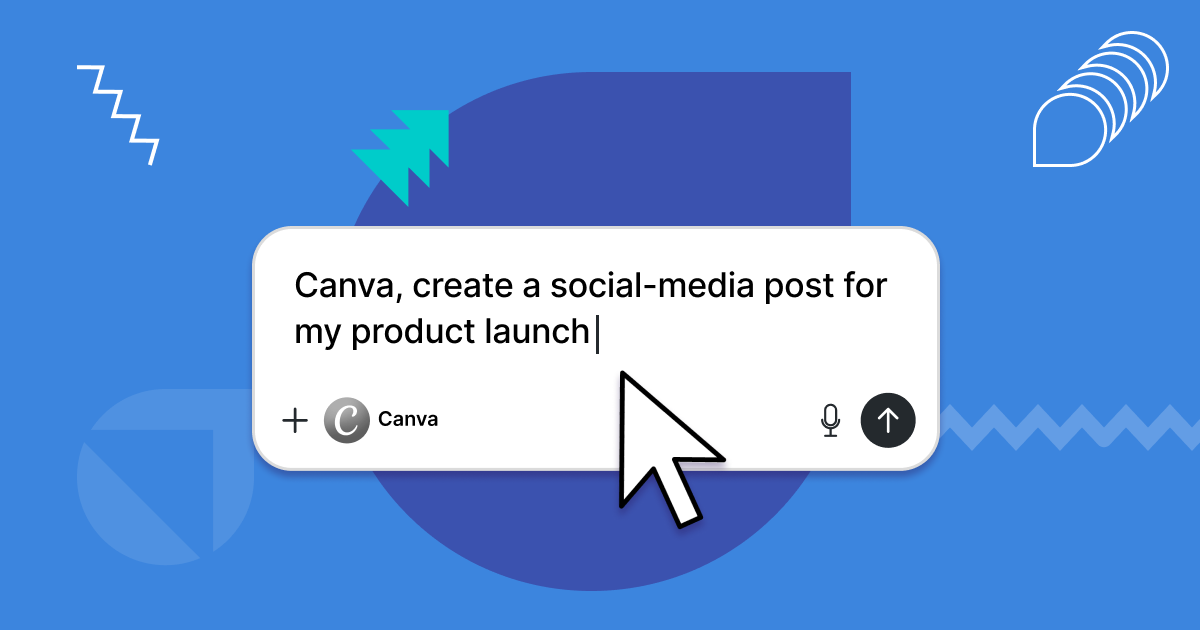
The experience is deceptively simple. A user types "Spotify, make a playlist for my dinner party on Friday," and the Spotify interface materializes within the chat. They can browse songs, create playlists, and share them—all without leaving the conversation. Similarly, someone asking "Zillow, find apartments in Seattle under $2,500" sees interactive property listings rendered inline, complete with maps and filtering options.

Early launch partners include Booking.com, Canva, Coursera, Expedia, Figma, Spotify, and Zillow, representing a diverse spectrum from creative tools to commerce platforms to educational services. Each demonstrates how apps can deliver specialized functionality at the exact moment users need it.

How Do ChatGPT Apps Work?

Building a ChatGPT App isn't like building a traditional web or mobile application. The architecture is fundamentally different, and understanding these differences is essential before committing resources.

The Foundation: Model Context Protocol (MCP)

At the core of every ChatGPT App lies an MCP server—the bridge between your backend logic and ChatGPT's conversational interface. The MCP server exposes tools that the model can call, enforces authentication, and packages both structured data and component HTML that ChatGPT renders inline.

Developers can choose between two official SDKs: Python (ideal for rapid prototyping with FastMCP) or TypeScript (suitable for Node/React stacks). Both support standard frameworks like FastAPI and Express.

Tool Descriptors: Your Contract with ChatGPT

Tools define what your app can do and how ChatGPT should invoke it. A well-structured tool includes:

  • An action-oriented name (like kanban.move_task)
  • A clear description of when to use it
  • An input schema with defined parameters and constraints
  • An output schema for structured data
  • Metadata linking to UI components

These descriptors determine how naturally ChatGPT can recommend your app. Poor tool design leads to apps that are never surfaced, even when relevant.

Custom UI Components

While ChatGPT handles the conversation, your app controls its visual interface. Components are typically React-based, run inside an iframe, communicate with the host via the window.openai API, and render inline with the conversation. They should be lightweight, responsive, and focused on a single task.

Authentication and Security

Users connect their accounts through OAuth 2.1 flows with explicit consent dialogs that enumerate requested data access. First-time use triggers a permissions prompt with clear disclosures, and subsequent tool calls honor granted scopes. This creates transparency but also adds friction—users must trust your app with their data before experiencing its value.

Deployment Requirements

Production-ready ChatGPT Apps require HTTPS endpoints for secure communication, properly bundled UI components with correct MIME types, and secure management of API keys and environment variables through secret managers. During development, tools like ngrok enable local testing.

Is Integrating Your Product With ChatGPT a Win?

Let's start with the most sobering statistic. A major study of 973 e-commerce sites analyzing $20 billion in revenue found that ChatGPT referral traffic accounted for only 0.2% of total sessions—roughly 200 times smaller than Google Organic traffic.

A separate analysis of 13,770 domains across 10 industries found that AI referrals overall represent about 1% of website traffic, with ChatGPT driving 87.4% of those AI referrals.

This creates an immediate strategic question: if users aren't clicking through to your website, how do you measure success?

The Conversion Paradox

While volume is low, traffic referred by ChatGPT had a conversion rate of 11.4%, compared to just 5.3% for organic search. Users who do transact show significantly higher intent.

Conversion rates are improving month over month, but average order value is shrinking: LLMs are learning to close snack-sized purchases like $19 accessories, not $900 sofas. This pattern suggests ChatGPT excels at low-friction, impulse purchases rather than considered, high-ticket transactions.

But these metrics only tell half the story. The reason referral traffic remains low is often because the user's journey no longer requires a destination. This creates the 'Stay-in-Chat' dynamic.

This means users accomplish what they need without leaving ChatGPT, and has profound implications depending on your business model.

For transaction-based businesses (retail, booking platforms, tools with consumption pricing), this can be a win. While specific conversion lift data for the Agentic Commerce Protocol is still emerging, the reduction of friction by enabling instant checkout within ChatGPT has the potential to dramatically increase conversion rates. By removing friction (no clicking out, no logging in, no entering payment details) drop-off points are eliminated.

For interface-based businesses (SaaS dashboards, ad-supported content), the dynamic is concerning. Industry analysts identify a "cannibalization" risk where users accomplish 80% of their work inside ChatGPT, questioning why they need to log into the dashboard at all.

Real estate agents noted that Zillow's integration keeps users in the chat for discovery and comparison, traditionally the stickiest part of their app, reducing time spent on the broker's actual site.

Who Wins and Who Loses?

Before authorizing a budget, you must determine if your business model survives the "Stay-in-Chat" dynamic.

Winners: Transaction and Consumption Models

  • E-commerce and retail: If you can enable instant checkout within ChatGPT, the friction reduction drives measurable conversion lift. The high intent of users who engage means fewer abandoned carts.
  • Booking and reservation platforms: Travel, dining, event ticketing—services where the transaction is the product—benefit from in-chat completion. Users asking "find me a hotel in Paris under €200" are ready to book.
  • Consumption-based pricing models: If you charge per transaction or API call rather than subscription, increased usage within ChatGPT directly translates to revenue. You don't need users to visit your dashboard.
  • Top-of-funnel acquisition tools: Canva's integration is often cited as a success because users generate a draft in ChatGPT, but to do the "final polish" (high-value action), they are deep-linked into Canva. ChatGPT acts as acquisition, not replacement.

Losers: Interface and Information Models

  • SaaS with dashboard dependency: If your value comes from users spending time in your interface—collaboration tools, analytics platforms, project management—ChatGPT integration risks teaching users they don't need your UI. Back-office tools that are really just CRUD logic or simple dashboards on top of customers' own data are at serious risk of being replaced by agents.
  • Ad-supported content: Publishers and media companies face a fundamental problem. For businesses that sell information, the "stay in chat" dynamic is a loss—AI overviews and chatbots satisfy the user's query directly, leading to a decline in organic click-throughs.
  • Simple tools with information value: If your product's core value can be replicated through API calls without needing your interface, you risk becoming infrastructure that users access only through AI.

Strategic Implementation: How to Integrate Without Getting Cannibalized

If you decide ChatGPT Apps make sense for your business, implementation strategy determines whether you capture value or give it away.

Define Your Integration Boundaries

Be intentional about what functionality lives in ChatGPT versus what requires your platform. The Canva model is instructive: allow creation and preview in ChatGPT, but require users to enter Canva for editing, customization, and exporting. The app becomes a bridge to deeper engagement, not a replacement.

Design for Hybrid Experiences

Structure your app to complement rather than replace your core product. Use ChatGPT for discovery, configuration, and initial interaction—then provide clear pathways to your platform for advanced features, collaboration, or premium capabilities.

Implement Proper Analytics

Traditional last-click attribution models systematically undervalue discovery and mid-funnel assistance. Build attribution systems that recognize ChatGPT's role in the customer journey, even when the final conversion happens elsewhere. Track assisted conversions, influence metrics, and cross-platform user journeys.

Control Your Economics

Structure your ChatGPT offerings to encourage bundles and upsells—let the AI act as a skilled salesperson. Consider how the Agentic Commerce Protocol enables merchants to maintain control as the merchant of record while ChatGPT acts as the user's agent.

Establish Clear Governance

Before launching, define policies about what data your app can access, who approves new features, how you monitor usage and outputs, and when humans need to be involved. Build safeguards against hallucinations and ensure you're comfortable being legally liable for what your integration does.

Start Small and Measure

Don't integrate your entire product suite at launch. Choose one high-value use case, implement it rigorously, measure actual business impact, and iterate based on real data. The temptation to be "AI-first" can lead to premature commitments that undermine your core business.

The Honest Assessment: Should You Build a ChatGPT App?

Should You Build a ChatGPT App?

Answer a few questions to get an honest, expert-backed assessment

⚠️ Important: This assessment provides initial guidance based on common patterns. Every business is unique and requires expert validation. We recommend consulting with our team to develop a comprehensive strategy tailored to your specific needs.
Contact Our Experts

We've Built This (So You Don't Have To Learn The Hard Way)

At NineTwoThree, we've built AI systems for over 150 clients across industries. We understand both the technical complexity of building production-ready integrations and the strategic nuance of avoiding cannibalization traps.

Our approach starts with discovery, not code. We assess whether ChatGPT Apps make strategic sense for your business model, identify the specific use cases that drive value without undermining your core product, and design integration architectures that complement rather than replace your platform.

Then we build. Our Ph.D-level AI engineers have deep expertise in MCP protocols, conversational interfaces, and production AI systems. We implement with the rigor required for business-critical integrations: robust error handling, comprehensive monitoring, and proper security.

If you're considering a ChatGPT App and want a partner who will tell you the truth about whether it makes sense, and how to do it right if it does, let's talk.

Because in platform shifts, the difference between winners and losers isn't just speed. It's a strategy.

Frequently Asked Questions

Q: Can ChatGPT Apps access my company's internal data?

Yes, through proper authentication and API integration. Your MCP server can connect to internal databases, CRMs, or other systems. However, you maintain full control over what data is exposed through your tool definitions. Implement proper access controls and only expose data necessary for the app's functionality.

Q: How do users discover my ChatGPT App?

Currently, users can discover apps in three ways: (1) explicitly calling them by name ("Spotify, make a playlist"), (2) ChatGPT suggesting them contextually when relevant to the conversation, or (3) browsing the upcoming app directory that OpenAI plans to launch. Apps that meet higher design and functionality standards may be featured more prominently.

Q: What's the difference between ChatGPT Apps and ChatGPT Plugins?

ChatGPT Plugins were the previous generation of integrations, focused primarily on data retrieval and simple actions. ChatGPT Apps, built on the Apps SDK, offer richer interactive UI components, better authentication flows, and more sophisticated conversational capabilities. Apps represent a complete re-architecture of the integration model.

Q: Can I monetize my ChatGPT App?

OpenAI has announced plans for monetization through the Agentic Commerce Protocol, which enables instant checkout within ChatGPT. Merchants pay a small fee on completed purchases. Additional monetization details, including support for subscriptions and in-app purchases, will be shared as the platform matures. Currently, most apps use ChatGPT as a top-of-funnel acquisition channel, driving users to their platform for paid features.

Q: Is my ChatGPT App data secure?

Security depends on your implementation. All communication must use HTTPS, OAuth 2.1 handles authentication, and payment data (if using Agentic Commerce Protocol) is encrypted via Stripe or other compliant payment processors. You're responsible for securing your backend, managing API keys properly, and following OpenAI's security guidelines. The Apps SDK documentation provides detailed security requirements.

Q: Can I use ChatGPT Apps for B2B/enterprise use cases?

Yes, ChatGPT Apps are now available to Business, Enterprise, and Edu customers. Enterprise use cases might include internal tools, workflow automation, or customer-facing applications. However, consider whether your enterprise customers want data flowing through ChatGPT's infrastructure versus on-premise solutions.

Q: How long does it take to get my app approved?

OpenAI hasn't published specific approval timelines yet, as the submission process is still being refined. Based on early partner experiences, expect a review process similar to app stores, likely 1-2 weeks for initial review, with potential back-and-forth for revisions. Apps must meet OpenAI's usage policies, be appropriate for all audiences, and follow developer guidelines.

Q: What happens if ChatGPT misunderstands and calls my app incorrectly?

This is why tool descriptors and error handling are critical. Design your tools with clear, unambiguous descriptions. Implement validation in your backend to reject invalid inputs gracefully. Provide helpful error messages that ChatGPT can relay to users. During testing, identify common misunderstandings and refine your tool descriptions. Remember: ChatGPT is probabilistic, not deterministic.

Q: Can I integrate with other AI platforms besides ChatGPT?

The Model Context Protocol (MCP) is designed to be platform-agnostic. While the Apps SDK is specific to ChatGPT, the underlying MCP server architecture can potentially work with other AI platforms that adopt the same protocol. OpenAI and Anthropic are collaborating on MCP standards, suggesting broader compatibility in the future.

OpenAI's introduction of apps inside ChatGPT in October 2025 marks a fundamental transformation in how businesses reach customers. With over 800 million weekly users, the comparison to the 2008 App Store launch is inevitable.

But for most businesses, that comparison is dangerous.

In 2008, the goal was to get a user to download your app and live in your ecosystem. In this new shift, the goal is to keep the user inside ChatGPT. 

This creates a "Zero-Click Reality": users might utilize your product without ever visiting your website.

So, is building a ChatGPT App a win for your business, a win for OpenAI, or a potential trap? Here is the full breakdown of the opportunity, the risks, and the actual engineering required based on our internal investigation.

What Are ChatGPT Apps?

ChatGPT Apps are interactive applications that run natively inside ChatGPT conversations, invoked by natural language commands and surfaced contextually when relevant. Instead of users jumping between tabs—opening ChatGPT, then your app, then back—they accomplish tasks in a single, continuous conversation.

The experience is deceptively simple. A user types "Spotify, make a playlist for my dinner party on Friday," and the Spotify interface materializes within the chat. They can browse songs, create playlists, and share them—all without leaving the conversation. Similarly, someone asking "Zillow, find apartments in Seattle under $2,500" sees interactive property listings rendered inline, complete with maps and filtering options.

Early launch partners include Booking.com, Canva, Coursera, Expedia, Figma, Spotify, and Zillow, representing a diverse spectrum from creative tools to commerce platforms to educational services. Each demonstrates how apps can deliver specialized functionality at the exact moment users need it.

How Do ChatGPT Apps Work?

Building a ChatGPT App isn't like building a traditional web or mobile application. The architecture is fundamentally different, and understanding these differences is essential before committing resources.

The Foundation: Model Context Protocol (MCP)

At the core of every ChatGPT App lies an MCP server—the bridge between your backend logic and ChatGPT's conversational interface. The MCP server exposes tools that the model can call, enforces authentication, and packages both structured data and component HTML that ChatGPT renders inline.

Developers can choose between two official SDKs: Python (ideal for rapid prototyping with FastMCP) or TypeScript (suitable for Node/React stacks). Both support standard frameworks like FastAPI and Express.

Tool Descriptors: Your Contract with ChatGPT

Tools define what your app can do and how ChatGPT should invoke it. A well-structured tool includes:

  • An action-oriented name (like kanban.move_task)
  • A clear description of when to use it
  • An input schema with defined parameters and constraints
  • An output schema for structured data
  • Metadata linking to UI components

These descriptors determine how naturally ChatGPT can recommend your app. Poor tool design leads to apps that are never surfaced, even when relevant.

Custom UI Components

While ChatGPT handles the conversation, your app controls its visual interface. Components are typically React-based, run inside an iframe, communicate with the host via the window.openai API, and render inline with the conversation. They should be lightweight, responsive, and focused on a single task.

Authentication and Security

Users connect their accounts through OAuth 2.1 flows with explicit consent dialogs that enumerate requested data access. First-time use triggers a permissions prompt with clear disclosures, and subsequent tool calls honor granted scopes. This creates transparency but also adds friction—users must trust your app with their data before experiencing its value.

Deployment Requirements

Production-ready ChatGPT Apps require HTTPS endpoints for secure communication, properly bundled UI components with correct MIME types, and secure management of API keys and environment variables through secret managers. During development, tools like ngrok enable local testing.

Is Integrating Your Product With ChatGPT a Win?

Let's start with the most sobering statistic. A major study of 973 e-commerce sites analyzing $20 billion in revenue found that ChatGPT referral traffic accounted for only 0.2% of total sessions—roughly 200 times smaller than Google Organic traffic.

A separate analysis of 13,770 domains across 10 industries found that AI referrals overall represent about 1% of website traffic, with ChatGPT driving 87.4% of those AI referrals.

This creates an immediate strategic question: if users aren't clicking through to your website, how do you measure success?

The Conversion Paradox

While volume is low, traffic referred by ChatGPT had a conversion rate of 11.4%, compared to just 5.3% for organic search. Users who do transact show significantly higher intent.

Conversion rates are improving month over month, but average order value is shrinking: LLMs are learning to close snack-sized purchases like $19 accessories, not $900 sofas. This pattern suggests ChatGPT excels at low-friction, impulse purchases rather than considered, high-ticket transactions.

But these metrics only tell half the story. The reason referral traffic remains low is often because the user's journey no longer requires a destination. This creates the 'Stay-in-Chat' dynamic.

This means users accomplish what they need without leaving ChatGPT, and has profound implications depending on your business model.

For transaction-based businesses (retail, booking platforms, tools with consumption pricing), this can be a win. While specific conversion lift data for the Agentic Commerce Protocol is still emerging, the reduction of friction by enabling instant checkout within ChatGPT has the potential to dramatically increase conversion rates. By removing friction (no clicking out, no logging in, no entering payment details) drop-off points are eliminated.

For interface-based businesses (SaaS dashboards, ad-supported content), the dynamic is concerning. Industry analysts identify a "cannibalization" risk where users accomplish 80% of their work inside ChatGPT, questioning why they need to log into the dashboard at all.

Real estate agents noted that Zillow's integration keeps users in the chat for discovery and comparison, traditionally the stickiest part of their app, reducing time spent on the broker's actual site.

Who Wins and Who Loses?

Before authorizing a budget, you must determine if your business model survives the "Stay-in-Chat" dynamic.

Winners: Transaction and Consumption Models

  • E-commerce and retail: If you can enable instant checkout within ChatGPT, the friction reduction drives measurable conversion lift. The high intent of users who engage means fewer abandoned carts.
  • Booking and reservation platforms: Travel, dining, event ticketing—services where the transaction is the product—benefit from in-chat completion. Users asking "find me a hotel in Paris under €200" are ready to book.
  • Consumption-based pricing models: If you charge per transaction or API call rather than subscription, increased usage within ChatGPT directly translates to revenue. You don't need users to visit your dashboard.
  • Top-of-funnel acquisition tools: Canva's integration is often cited as a success because users generate a draft in ChatGPT, but to do the "final polish" (high-value action), they are deep-linked into Canva. ChatGPT acts as acquisition, not replacement.

Losers: Interface and Information Models

  • SaaS with dashboard dependency: If your value comes from users spending time in your interface—collaboration tools, analytics platforms, project management—ChatGPT integration risks teaching users they don't need your UI. Back-office tools that are really just CRUD logic or simple dashboards on top of customers' own data are at serious risk of being replaced by agents.
  • Ad-supported content: Publishers and media companies face a fundamental problem. For businesses that sell information, the "stay in chat" dynamic is a loss—AI overviews and chatbots satisfy the user's query directly, leading to a decline in organic click-throughs.
  • Simple tools with information value: If your product's core value can be replicated through API calls without needing your interface, you risk becoming infrastructure that users access only through AI.

Strategic Implementation: How to Integrate Without Getting Cannibalized

If you decide ChatGPT Apps make sense for your business, implementation strategy determines whether you capture value or give it away.

Define Your Integration Boundaries

Be intentional about what functionality lives in ChatGPT versus what requires your platform. The Canva model is instructive: allow creation and preview in ChatGPT, but require users to enter Canva for editing, customization, and exporting. The app becomes a bridge to deeper engagement, not a replacement.

Design for Hybrid Experiences

Structure your app to complement rather than replace your core product. Use ChatGPT for discovery, configuration, and initial interaction—then provide clear pathways to your platform for advanced features, collaboration, or premium capabilities.

Implement Proper Analytics

Traditional last-click attribution models systematically undervalue discovery and mid-funnel assistance. Build attribution systems that recognize ChatGPT's role in the customer journey, even when the final conversion happens elsewhere. Track assisted conversions, influence metrics, and cross-platform user journeys.

Control Your Economics

Structure your ChatGPT offerings to encourage bundles and upsells—let the AI act as a skilled salesperson. Consider how the Agentic Commerce Protocol enables merchants to maintain control as the merchant of record while ChatGPT acts as the user's agent.

Establish Clear Governance

Before launching, define policies about what data your app can access, who approves new features, how you monitor usage and outputs, and when humans need to be involved. Build safeguards against hallucinations and ensure you're comfortable being legally liable for what your integration does.

Start Small and Measure

Don't integrate your entire product suite at launch. Choose one high-value use case, implement it rigorously, measure actual business impact, and iterate based on real data. The temptation to be "AI-first" can lead to premature commitments that undermine your core business.

The Honest Assessment: Should You Build a ChatGPT App?

Should You Build a ChatGPT App?

Answer a few questions to get an honest, expert-backed assessment

⚠️ Important: This assessment provides initial guidance based on common patterns. Every business is unique and requires expert validation. We recommend consulting with our team to develop a comprehensive strategy tailored to your specific needs.
Contact Our Experts

We've Built This (So You Don't Have To Learn The Hard Way)

At NineTwoThree, we've built AI systems for over 150 clients across industries. We understand both the technical complexity of building production-ready integrations and the strategic nuance of avoiding cannibalization traps.

Our approach starts with discovery, not code. We assess whether ChatGPT Apps make strategic sense for your business model, identify the specific use cases that drive value without undermining your core product, and design integration architectures that complement rather than replace your platform.

Then we build. Our Ph.D-level AI engineers have deep expertise in MCP protocols, conversational interfaces, and production AI systems. We implement with the rigor required for business-critical integrations: robust error handling, comprehensive monitoring, and proper security.

If you're considering a ChatGPT App and want a partner who will tell you the truth about whether it makes sense, and how to do it right if it does, let's talk.

Because in platform shifts, the difference between winners and losers isn't just speed. It's a strategy.

Frequently Asked Questions

Q: Can ChatGPT Apps access my company's internal data?

Yes, through proper authentication and API integration. Your MCP server can connect to internal databases, CRMs, or other systems. However, you maintain full control over what data is exposed through your tool definitions. Implement proper access controls and only expose data necessary for the app's functionality.

Q: How do users discover my ChatGPT App?

Currently, users can discover apps in three ways: (1) explicitly calling them by name ("Spotify, make a playlist"), (2) ChatGPT suggesting them contextually when relevant to the conversation, or (3) browsing the upcoming app directory that OpenAI plans to launch. Apps that meet higher design and functionality standards may be featured more prominently.

Q: What's the difference between ChatGPT Apps and ChatGPT Plugins?

ChatGPT Plugins were the previous generation of integrations, focused primarily on data retrieval and simple actions. ChatGPT Apps, built on the Apps SDK, offer richer interactive UI components, better authentication flows, and more sophisticated conversational capabilities. Apps represent a complete re-architecture of the integration model.

Q: Can I monetize my ChatGPT App?

OpenAI has announced plans for monetization through the Agentic Commerce Protocol, which enables instant checkout within ChatGPT. Merchants pay a small fee on completed purchases. Additional monetization details, including support for subscriptions and in-app purchases, will be shared as the platform matures. Currently, most apps use ChatGPT as a top-of-funnel acquisition channel, driving users to their platform for paid features.

Q: Is my ChatGPT App data secure?

Security depends on your implementation. All communication must use HTTPS, OAuth 2.1 handles authentication, and payment data (if using Agentic Commerce Protocol) is encrypted via Stripe or other compliant payment processors. You're responsible for securing your backend, managing API keys properly, and following OpenAI's security guidelines. The Apps SDK documentation provides detailed security requirements.

Q: Can I use ChatGPT Apps for B2B/enterprise use cases?

Yes, ChatGPT Apps are now available to Business, Enterprise, and Edu customers. Enterprise use cases might include internal tools, workflow automation, or customer-facing applications. However, consider whether your enterprise customers want data flowing through ChatGPT's infrastructure versus on-premise solutions.

Q: How long does it take to get my app approved?

OpenAI hasn't published specific approval timelines yet, as the submission process is still being refined. Based on early partner experiences, expect a review process similar to app stores, likely 1-2 weeks for initial review, with potential back-and-forth for revisions. Apps must meet OpenAI's usage policies, be appropriate for all audiences, and follow developer guidelines.

Q: What happens if ChatGPT misunderstands and calls my app incorrectly?

This is why tool descriptors and error handling are critical. Design your tools with clear, unambiguous descriptions. Implement validation in your backend to reject invalid inputs gracefully. Provide helpful error messages that ChatGPT can relay to users. During testing, identify common misunderstandings and refine your tool descriptions. Remember: ChatGPT is probabilistic, not deterministic.

Q: Can I integrate with other AI platforms besides ChatGPT?

The Model Context Protocol (MCP) is designed to be platform-agnostic. While the Apps SDK is specific to ChatGPT, the underlying MCP server architecture can potentially work with other AI platforms that adopt the same protocol. OpenAI and Anthropic are collaborating on MCP standards, suggesting broader compatibility in the future.

color-rectangles

Subscribe To Our Newsletter